Home » Tips and Tricks » Communication Skills (Page 2)
Category Archives: Communication Skills

50 Communications Activities, Icebreakers, and Exercises
Here you will find the following 50 Communications
Activities, Icebreakers, and Exercises discussed:
Part I. Communications Principles
- Communications Is an Art
- Communicating Time
- Communications Is the Key
- I Know You Believe You Understand
- Communications Model
- Listening Dilemma
- Interactive Listening Tips
- Listening Bad Habits
- Listening Questionnaire
- Seven Levels of Listening
- Silent Messages
- The Three Levels of Communications
- Nonverbal Listening Test
- Laws of Remembering
- Laws of Forgetting
- Meaning of Words
- Communications Circles
- Attention Spans
- Meaning of Listening
Part II. Communications Icebreakers
- Vanity Name Cards
- Repeating Introductions
- Circle, Square, Triangle, or Z
- Introducing Each Other
- Fantasy Career
- Name that Participant
- Story of Your Name
- Nickname Game
- Introduction Bingo
- Card Match
Part III. Communications Exercises
- Reading Test
- The Longest Line
- Color Block
- Following Directions
- Train Story
- Count the Ss
- Communications Shutdowns
- Repeat the Question
- Quick Answers
- Rephrasing Exercise
- Wedding Story
- Who Done It?
- Picture Puzzle
- Creative Fairy Tale
- Rumors
- The Shoe Store
- Two Moose Sitting on a Log
- Communications Styles
- “Oh”
- Word Games
- Trading Cards
55 Must-Know Phrases to Land a Job!
55 Must-Know Phrases to Land a Job!
We will be discussing the following things in this Post:
Speaking With Your Recruiter NEW!!!
Describing Your Educational Background
Describing Your Profile UPDATED!!!
Describing Previous Experience and Your Current Position UPDATED!!!
Explaining Why You Want This Job
The Tricky Part of Any Interview – Salary UPDATED!!!
What Sets You Apart From Other Candidates?
Language Skills
You should CONSTANTLY practice with yourself during these last days leading up to the interview!
Speaking With Your Recruiter NEW!!!
NEW! I would consider any decent job offer – let’s assume for argument’s sake that you’re really stuck for money and you are prepared to accept any job offer for as long as it pays your bills and puts food on your family’s table. Now, this is how you explain it to the recruiter – instead of saying “I’m desperate to find a job and I’m ready to do anything!” you can make it sound smarter and more professional.
NEW! I’d be willing to take up employment in – this is a somewhat similar phrase, the only difference is that with this one you can be more specific and tell your recruiter what sector you’d be willing to work in. And by the way – there’s nothing wrong with starting with the previous sentence and then continuing with this one: “Eventually I would consider any decent job offer, but for the time being I’d be willing to take up employment in warehousing because that’s the kind of background I have.”
Describing Your Educational Background
I graduated from … University (College) in … – this is a sentence structure you can use when telling what University or College you graduated and when it happened: “I graduated from Trinity College Dublin in 2007.”
I majored in … – if you’ve been studying at a third-level institution such as a University, you’ll know that soon after commencing your studies you have to choose a major (a specialty within your field of study). This is how you explain to your job interviewer what your major was: “… and I majored in Engineering.”
I graduated as … in … – here’s an alternative way of saying what your specialty is and when exactly you acquired the degree: “I graduated as a Mechanical Engineer in 2009.”
I enrolled for a … degree in … – you may also want to tell your future employer when exactly you started your studies, and there’s no better way of doing it than this one: “I enrolled for a bachelor’s degree in 2010!” You can also use the same word “enroll” when describing what course, for example, you’ve just started: “I’ve enrolled for a PC maintenance course and I’m going to finish it in 7 months.”
Obtained my … degree – this English collocation describes the simple fact of getting a degree – it’s just that the word “obtain” sounds a bit more fancy and will send the message to the interviewer that you’re a true professional: “… and I successfully obtained my master’s degree in 2 years.”
I’m an individual with a solid … educational background – do you want to praise yourself a little bit during the job interview? Well, there’s nothing wrong with that if done sparingly! And this phrase is just what you need: “I’m an individual with a solid IT educational background.”
Engaged in extensive extra-curricular activities – do you want to show to your potential employer that you’ve always stayed active during your studies and did a lot of extra work? This is the proper phrase to be used in such a situation!
Describing Your Profile UPDATED!!!
I’m a wide profile sales/marketing/customer support professional– this is a general phrase used to describe industry/-ies you’re been working in. If you say ‘wide profile’ instead of just ‘I’ve been working in …’, it will sound smarter and more professional!
I perform well under pressure is a phrase you can use to describe that you’re an employee very well capable of working when there’s a lot of pressure and you’ll do your best to get things done.
I’m used to working in a busy environment – similar to the previous one, and you can use it interchangeably with ‘I perform well under pressure’ during an interview so that you don’t constantly repeat yourself.
Customer-oriented means you value customers and you’ll be polite and efficient when dealing with them. Remember – customers are life-blood of every business, so this is what every potential employer will want to hear from you!
Meeting targets is a professional way of saying ‘getting things done in time’. In terms of work and professional environment, ‘targets’ is the word that’s used to describe tasks and assignments, so you should use it to sound like a true professional.
Handle stress easily – this phrase is especially relevant in customer support and other industries when dealing directly with customers – starting with catering and ending with direct sales.
Team player – if you’re a likeable person who gets along well with others while at the same time being able to maintain professional relationship instead of filling your workplace with gossip – then you’re a ‘team player’!
Can-do attitude – means you don’t accept defeat and you don’t get confused the moment situation gets difficult and complicated at work. You just get things done, you cheer others up in your workplace and you’re the right person for the job you’re going for!
Drive to succeed is one of characteristics of a typical career person, and you definitely want to mention that during the interview or in your CV. Your future employer will look for someone who’s naturally driven by success, so make sure to describe yourself as such a person.
Results driven – this phrase is somewhat similar to the previous one with emphasis on results. Success is a more general term; results imply you’re good at meeting targets, too.
Eager to learn – use this English collocation to stress the fact that you’re always taking opportunities to acquire new knowledge. It’s going to send a message to your interviewer that you’re not afraid of new duties and responsibilities!
Good at multitasking – use this phrase to convince your future employer that you’re not easy to give into despair when things are getting hectic and you have to juggle a lot of responsibilities at the same time.
NEW! I have a natural ability to… – this is a great way to describe your abilities, and what happens when you use the word “natural” in this context is – you’re making it sound as if you were born with that ability which in turn means you’re excellent in that particular department. “I have a natural ability to manage people” – it makes it sound like you’re a born leader, whereas if you simply say “I’m good at managing people”, it doesn’t send quite the same message to the interviewer.
NEW! Defuse conflict situations – if you’re ever asked about your ability to deal with difficult situations and difficult people in particular, this is the English collocation you may want to use – it’s a perfect way of describing the process of making sure that a conflict situation doesn’t escalate and gets resolved instead.
NEW! Committed to meeting deadlines and targets! – are you going for a position where you’d be required to work towards meeting targets and deadlines? Then describe yourself as being “committed” to them – it will boost your chances of getting selected for the job!
NEW! I possess excellent… skills – in case you think that you would run the risk of sounding too boastful during the interview, rest assured that that’s exactly what your interviewer wants to hear! I mean – when you do the job interview, you have to sell yourself, and that’s exactly what this phrase does – the word “excellent” sends out a strong message that your skills are up to scratch. “I possess excellent customer service skills” – surely if you were an interviewer, you’d be most likely to pay attention to someone who describes their customer service skills as being excellent instead of just “good”, right?
NEW! I’m a problem solver – if you’re going for a position where you’d be required to deal with difficult tasks, this is how you should describe yourself. It’s a simple yet effective way of letting the interviewer know that solving various problems is one of your greatest strengths!
Describing Previous Experience and Your Current Position UPDATED!!!
I have … years’ experience in the field – this phrase allows you to describe your experience precisely while using professional lingo at the same time.
Proven track record – when you say, for example – “I have a proven track record in telecommunication” – it means you’ve been working in the sector and you have an official employment history and related references.
Work against the clock – this is a perfect way of describing a fast-paced work environment in your previous or current job. Another good job-seeking related word combination to go with this one is ‘to meet deadlines’ – “We often have to work against the clock to meet deadlines during the busy season.”
SLA (Service Level Agreement) is a standard term used across industries whenever two parties have agreed on certain targets in terms of performance. It’s especially relevant for customer support based positions where every individual has to work towards meeting Service Level Agreements such as responding on e-mails within a certain period of time, logging phone calls properly and ensuring timely resolution of customer problems. So if you’ve been having similar responsibilities in your current/previous job but you didn’t know it’s called ‘meeting SLAs’ – make sure you use this smart phrase in your CV and job interview!
Liaise with other departments – it’s a fancy way of saying ‘to communicate with other departments’. If you’re willing to get the job though, you may as well learn the word ‘liaise’. When it comes to speaking about your communication between departments in your company, you’ll know exactly what phrase to use!
NEW! Deal with an extremely high level of… – this is a great way of describing the fact that you have to deal with a very high volume of work, and it makes it sound really professional. Here’s an example: “… and during the busy season I have to deal with an extremely high level of sales orders…” – you just have to admit it makes it sound like you’re a really hard worker, doesn’t it?
NEW! Currently I’m between jobs – if you happen to be out of work at the moment and the interviewer asks you the question: “Are you currently working?” – this is the phrase you may want to use! If you just say “I’m out of work”, it makes you sound as if you’re a little bit of a loser, but the phrase “between jobs” makes it sound as if you’re still working while at the same time being out of work!
Explaining Why You Want This Job
This question comes up during every job interview, and oftentimes interviewees aren’t quite sure how to respond to it. It’s essential therefore that you learn a few phrases you can use exactly for this purpose!
Also remember – never speak ill of your previous/current jobs or employers! Even if you’re going for a new job because you hate your boss, never admit to it during an interview. That’s when the following phrases come in handy:
I want to further my career in sales/marketing – it’s a perfect way of saying that there aren’t any promotional opportunities in your current job without admitting to it directly.
In line with my qualifications – if you tell your future boss that you want to get this job because it’s in line with your qualifications, it’s going to send a message that you’re a person fully aware of what your expertize is. And I don’t think they’ll keep probing you during the interview until they get you to confess that you’re just unhappy with your current job. They’ll take this answer as a satisfactory response and be happy with it!
I want to take on more responsibility – a totally valid phrase you can use when aiming for a slightly higher position. Just like when using the first phrase in this section you can use this sentence, highlight the fact that you’re an ambitious professional but don’t say directly – “Nobody will promote me in my current company…”
I want to pursue a career in… – this is how you explain that you simply want to start a career in a particular industry and that’s why you’re applying for this position: “Having worked 10 years in the retail industry, I made the decision to upskill and now that I have my certificate done, I want to pursue a career in accountancy.”
This job would be a natural progression – this is a great way of explaining why you actually want this particular job. Well, obviously you have to highlight what features of the new job would constitute the progression or else it will seem that you’re just using this phrase as a cliché: “Considering that I’d be required to deal with the customers directly, this job would be a natural progression for me as a sales professional!”
The Tricky Part of Any Interview – Salary UPDATED!!!
In 9 situations out of 10 you’re looking for a better pay when going for a new job, aren’t you? But what if the advertised position doesn’t have a price-tag attached to it? The problem is – you can’t just tell your potential employer right upfront – I want to get paid 12$/h!
That’s when you have to be smart and use the right phrases to send a message to the interviewer that you’re aware of what your experience and skills are worth.
NEW! I believe it’s fair for me to expect… – this is how you can start talking about your salary expectations – the word “fair” here is the key and sets the right tone for what’s to come after that!
Competitive salary – you can’t go wrong with this one – if you say that you’re expecting a ‘competitive salary’, it means you know what the industry average is and you’d like to get at least that amount of hourly wage.
My remuneration was adequate – if you don’t want to reveal how much you earned in your previous company, this is the phrase to use!
I expect experience based remuneration – as I already told you – mentioning numbers during a job interview speaks of bad manners, so if you’re quite an experienced professional in a certain field, it’s safe to say that you expect your experience to reflect on your remuneration package.
My salary expectations are in line with my qualifications and education – same thing as the previous phrase but with an emphasis on your qualifications and education. This is a good way of emphasizing your educational background and its role in your career – of course, if you have something really relevant to bring to the table. If you expect your bachelor’s diploma to work as a salary-boosting factor when applying for a catering position – better think twice!
What Sets You Apart From Other Candidates?
It’s another one of those questions that can make or break your job interview. The thing is – while both you and your future employer know that you’re probably not a unique person among other job-seekers out there, you’ve just got to sell yourself as the best person possible for the position!
And of course – don’t forget that being a foreign English speaker, you have to sell your spoken English skills as well, so that’s when the following phrases come in handy:
What sets me apart from other candidates is – this is how you can actually start the sentence to describe your unique qualities: “What sets me apart from other candidates is my ability to handle difficult customers.”
… is what makes me the best candidate for this position! – and this is another handy phrase used to make it 100% clear what you think is your best quality: “So I strongly believe that my ability to perform well under extreme pressure is what makes me the best candidate for this position!”
I’m self-motivated – this phrase is kind of overused, but if you really mean it, it says a lot about you as a worker. It means you don’t have to be constantly supervised and you’re mature enough to take on responsibility!
I take pride in my work – this a great phrase and I bet your future boss wants to employ someone who takes pride in his/her job and is enthusiastic enough to make sure day-to-day tasks are run effectively.
I’m very attentive to detail – here’s a quality that can really set you apart from others. I know from my own experience that small mistakes can lead to big expenses down the road for your employer, so having someone on board who’s going to be meticulous when it comes data entry and similar tasks is very important!
I’m 100% involved while performing work-related duties means you’re really dedicated and your future boss won’t have problems with you not completing your tasks and assignments.
I’m good at resolving problem situations – don’t forget to mention a difficult situation from your past which you resolved successfully. Typically it involves dealing with a difficult customer, but it can also include resolving other problems – delivery issues, technical problems and whatnot.
Language Skills
It’s of the utmost importance for you as a foreign English speaker to describe your English and other language skills so that those descriptions properly portray your capability of using the respective languages. Here’s how to describe your English skills other than just ‘fluent’:
I have effective communication skills in English – both verbally and in writing. It’s a perfect way of elaborating on the matter in your CV because it also explains that you’re good both at writing and speaking. ‘Fluent’ is a term that can be stretched; this phrase, however, leaves very few questions to be asked!
I’ve been speaking English for the last … years – you can use this sentence to alleviate any doubts that your English mightn’t be good enough for the job.
I’ve been working in an English speaking environment for the last … years – same as the previous one, with a slight emphasis on your work-related spoken English skills. It’s going to send a strong message to your future employer that you won’t have any problems communicating with your fellow employees and supervisors!
My English is competent for this industry – it’s a way of admitting that your English mightn’t be 100% fluent yet you can deliver 100% results in the respective industry. You’re probably better off avoiding this phrase unless you run into some English fluency issues during the interview and then this might be your last chance to salvage the situation.
… wouldn’t present any difficulties whatsoever – this is how you explain that you’re really comfortable using the English language: “Using English at work wouldn’t present me any difficulties whatsoever – I’ve been around English speakers for 5 years.”
As we all know, in times of stress your spoken English may suddenly sound quite bad, and I’ve written about dealing with such and similar problems extensively. Here are a few articles you should definitely read:
- Native English Speakers Don’t Always Spot Your Mistakes!
- How to Achieve Complete English Fluency in 4 Easy Steps
- Put On a Show Every Time You Speak in English
The biggest problem you may be facing is the following – your English is quite fluent, but stress is getting the better of you during the interview which in turn results in a lot of spoken English mistakes. Now, in your CV you’ve indicated that your English is fluent, but if that’s the case – why you’re sounding like a beginner English learner?
Therefore it’s best to prep up for the interview well in advance to avoid such situations, and if you’ve memorized at least a dozen smart phrases like the ones in this article, your chances of sounding like a fluent English speaker are much bigger!
You should CONSTANTLY practice with yourself during these last days leading up to the interview!
- Create the potential interview questions and answers on paper.
2. Highlight the most commonly used expressions & industry phrases (they’re the ones in the article above!)
3. Learn those expressions off by heart and do a role-play whereby you pretend to be both yourself and the interviewer.
4. For best results,record it all on a camcorder!
5. Do this exercise all over and over again until you can comfortably provide an answer on all possible questions.
And of course – on the interview day simply forget about it all and try and ignore everything – the mounting pressure, everything. Just go into the interview room and allow your mouth to do the talking because the more you’ll stress out, the worse you’ll perform!
Basically the key is to do LOADS of spoken practice beforehand and allow all those speech patterns to literally embed themselves into your brain so that you don’t have to FORCE yourself to say this or that particular thing.

16 Ways to Improve Your Writing Skills (Download in .docx)
Download the following article in .docx format.
Click the download button below:

16 Ways to Improve Your Writing Skills:
Nothing strikes fear into the heart of a marketer quite like being asked to write a blog post. Some marketers would rather wrestle with pivot tables (or grizzly bears) for days on end than write a blog post – but why?
With content marketing shaping up as one of the most important marketing skills to have on your resume, getting a handle on writing could really benefit your career as well as the obvious benefit of increasing traffic to your company’s site. Writing is intimidating to a lot of people, particularly those who don’t write for a living or blog on a regular basis. The good news is that writing doesn’t have to be agonizing, and almost anybody can hone their writing skills with a little discipline and a willingness to learn. In today’s post, I’m going to share 16 ways you can start improving your writing skills right now.

Summary of post 16 Ways to Improve Your Writing Skills :
- Brush Up on the Basics
- Write Like It’s Your Job
- Read Like It’s Your Job
- Find a Writing Partner
- Join a Workshop or Take a Night Class
- Dissect Writing That You Admire
- Imitate Writers You Admire
- Remember That Outlines Are Your Friend
- Edit Your Work Ruthlessly
- Accept That First Drafts Are Almost Always Crap
- Find a Good (Patient) Editor
- Eliminate Unnecessary Words
- Take a Stroll Down Memory Lane
- Don’t Be Afraid to Say What You Think
- Do Your Research
- Don’t Take Weeks to Finish a Post
1. Brush Up on the Basics
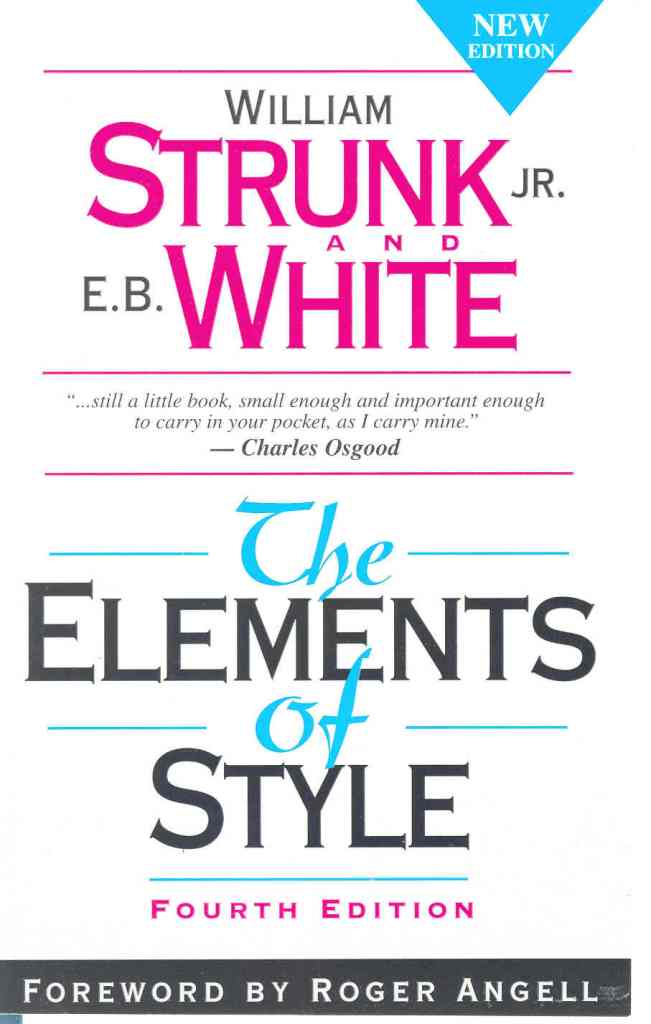
Before you can start writing incredible content, you’ll need at least an intermediate understanding of the basic principles of writing. This doesn’t mean you need to enroll in a prestigious creative writing program at an Ivy league university, but you will need to know the basics of grammar and spelling. Every writer should have a copy of “The Elements of Style” by Strunk and White on their bookshelf, as this small but invaluable book is one of the most comprehensive resources on the correct use of grammar and other helpful topics. For quick and easy online resources, bookmark Grammar Girl and, of course, Merriam Webster.
2. Write Like It’s Your Job
If you want to get better at something, you have to practice – and writing is no exception. Unfortunately, there are few shortcuts that can transform you into an amazing writer overnight, and even the most talented writers had to learn their craft over a period of many years. It’s admitedly even harder to write while considering SEO and how to drive traffic to your post.
If you want to improve your writing skills, writing on a regular basis will not only diminish your fear of the blank page (or blinking cursor), it will also help you develop a unique style. So, even if nobody reads it, keep writing. Practice makes perfect.
3. Read Like It’s Your Job
The best writers are also keen readers, and reading on a regular basis is an easy way to start developing your writing skills. I don’t just mean blog posts, either – diversify your reading material. Expand your horizons to more challenging material than you typically read, and pay attention to sentence structure, word choice, and how the material flows.
The more you read, the more likely you are to develop an eye for what makes a piece so effective, and which mistakes to avoid.
4. Find a Writing Partner
If you work at a reasonably sized company, the chances are pretty good that there is at least one other person who also secretly harbors a desire to become a better writer. Although writing is typically considered a solitary activity, the best writers know when it’s time to get much-needed feedback on their work.
Talk to your coworkers (or friends) and ask someone if they’d be willing to cast an eye over your work – they may spot mistakes that you overlooked. Finding a writing partner is also a great way to hold yourself accountable and keep going.
5. Join a Workshop or Take a Night Class
Most people balk at the idea of standing in front of a room full of strangers and baring their soul to the world, but joining a writing workshop can be immensely beneficial – and a lot of fun (if you manage to find a good one).
You don’t need to have an unfinished novel hidden away in your desk drawer to join a workshop. These days, content marketing meet-ups and professional development groups are becoming wildly popular. Join one of the many content marketing groups on LinkedIn to meet like-minded writers, or search for writing workshops near you on sites like Meetup. Pick a topic, write something, listen to the feedback of the group, and then revise it. Rinse, repeat.
6. Dissect Writing That You Admire
Most people read the same blogs or sites on a regular basis because the material appeals to them – but fewer people understand why their favorite blogs are so appealing.
Find a handful of recent blog posts you really like, then print them out. Next, just like your high school English teacher did, take a red pen and highlight things you liked: certain sentences, turns of phrase, even entire paragraphs. Examine why you like these elements, and see if there are any common threads in your favored reading material. See how writers take one subject and transition into another. Apply these techniques to your own work.
Let’s take a look at a particularly powerful (and memorable piece) from Copy blogger that serves as a great example of this.
Immediately, you’re hooked by Morris’ opening. You can’t not read to see what happens next. The pacing is excellent, it grabs your attention, and best of all, it keeps you reading. This piece was first published back in June, and I still remember it. Read the full post here, and see how Morris masterfully tells the story of a band named Death and how this relates to writing content.
7. Imitate Writers You Admire
Before we go any further, a disclaimer – imitation is not the same as plagiarism. Don’t rip off anyone’s work. Ever.
Just as you probably have a list of blogs you read often, you’ll likely also read the same writers on a regular basis. Identify what it is you enjoy about their work, and see if you can use it to improve your writing skills. Does a writer you like use humor to spice up dry topics? Try it. Do they use pop culture references to make their work entertaining and useful? Try that, too.
When I first started writing, I imitated some of my favorite nonfiction writers and essayists, such as Joan Didion, Truman Capote and Bill Bryson. I also attempted (and failed) to imitate writers such as Dave Eggers and Dan Kennedy, but soon realized that I wasn’t funny enough and gave it up. Over time, I eventually developed my own style, but reading the works of these writers and seeing how they constructed their essays and books was immensely helpful to me as a writer.
8. Remember That Outlines Are Your Friend
The blinking cursor of a blank page is a considerable foe, even for the most experienced writers. Before putting pen to proverbial paper, sketch out an outline of what you plan to write. This will be your battle plan, and it will help you win the war. Very few – and I do mean very few – writers sit down to write anything without a solid plan in mind.
An outline doesn’t have to be complex. A simple framework of which sections should appear in a particular order, along with a few sentences about what each section contains, may be enough. If the topic you’re tackling is a little more complex, your outline might have to be, too – but having an outline before you write is like having a roadmap in the glove box of your car before a road trip. If you start to feel lost, refer back to your outline and get back to kicking ass and taking names.
Let’s take a look at a real example – one of my own outlines:
Introduction
Brief summary of the post
Section 1 – What is Brand Voice?
Paragraph(s) explaining the key principles behind brand voice (style, tone, and messaging)
Examples of each
Section 2 – Developing Brand Voice with Content
Explanations of how to develop brand voice using content (written, visual, video)
Considerations for content producers/marketers to bear in mind when producing content (strategy, goals, overall brand messaging)
Section 3 – Examples of Content That Builds Brand Voice
Several examples (three or four) of content that aligns well with marketing positioning and branding of recognizable brands
Conclusion
Wrap-up
This outline eventually became my recent post about brand voice. I deviated from my initial outline slightly, but the overarching structure was always there to keep me on target.
9. Edit Your Work Ruthlessly
So, you’re writing every day (or regularly, at least), and you’re feeling more confident about your work. Awesome! Now you’re going to become your own harshest critic.
Editing is a tough skill to learn for beginner writers, because they place immense value on the time and effort they put into writing in the first place. However, a lot of writing is actually rewriting, and this is where the cold, hard eye of an editor will serve you well.
Develop the discipline it takes to eliminate extraneous words (more on this shortly). Resist the temptation to wax lyrically and get to the point. Not sure if a paragraph works? It probably isn’t. Be tough on yourself, and know when to delete or rework something. Your work will be much stronger as a result.
10. Accept That First Drafts Are Almost Always Crap
The best writers make it look so easy. After reading a great post, it’s tempting to imagine your favorite bloggers effortlessly turning in incredible posts with minimal effort before spending the rest of their day reading obscure books in a quaint corner café somewhere. Take comfort in the knowledge that this isn’t how writing works.
First drafts are almost always crap, and that’s okay. Don’t beat yourself up if you don’t create a masterpiece on your first attempt – chances are, you probably won’t, and that’s okay, too. Just get your ideas down on paper first, then go back and start cleaning up. Writing is an iterative process, and even the best writers have to spend a lot of time reworking material they were probably too embarrassed to show anybody.
11. Find a Good (Patient) Editor
Whether you’re trying to make the case for a content strategy to your manager or want to start guest blogging on your favorite sites, finding and working with a good editor is one of the best things you can do to improve your writing skills. I’ve worked with dozens of editors over the years, and in my experience, the best are those who show you why something doesn’t work, rather than just telling you that it doesn’t.
Allowing someone else to read your work can be brutally difficult for some writers, especially when they’re just starting out, but it’s crucial that you develop good habits from the outset and learn to accept constructive criticism about your work. Remember – writers are desperately needy creatures who need to be constantly reassured that they’re the creative geniuses they believe themselves to be, but you’ll need to develop a thick skin if you’re serious about your work, and a good editor is invaluable when it comes to toughening up.
12. Eliminate Unnecessary Words
Another common mistake among beginner writers (and some more experienced writers who should know better) is writing overly complex sentences in an attempt to “sound” more authoritative.
In many cases, shorter sentences can have a greater impact. You may have heard of a six-word story that was supposedly written by Ernest Hemingway, which reads, “For sale: Baby shoes, never worn.” Whether Hemingway wrote this or not is irrelevant – the power of these six words shows that brevity can be a powerful tool when used correctly, and not every sentence needs to be overwrought to get your point across.
Let’s look at another real example from one of my posts – my very first post for WordStream, as it happens. This lengthy sentence is a prime candidate for a ruthless red pen, even if my lame jokes were intended to give it a little more flavor. I’ve edited the sentence to show you how you could edit a similar line in your own work (additions italicized).
“Whether you’re a newcomer to AdWords or have been running PPC campaigns since Google launched the platform in 2000 (with a grand total of 350 customers) for years, you’ve probably given a great deal of thought to about which keywords will result in more clicks and higher conversions – not to mention that vacation home in Lake Tahoe you’ve been dreaming about.”
13. Take a Stroll Down Memory Lane
I’ve been writing professionally, in one way or another, for the past ten years. When I look back at my early work, which I do every so often, it literally makes me cringe. I don’t do this because I’m a masochist, but to remind myself how far I’ve come.
Writing should be fun, and along with the thrill of seeing your byline for the first time, seeing how far you’ve progressed is one of the most satisfying parts of being a writer. Every now and then (but not too often), re-read your earlier work and marvel at how much better you are now than you were then. Pat yourself on the back. You’ve worked hard, so don’t be shy – congratulate yourself.
14. Don’t Be Afraid to Say What You Think
Most content on the web is bland and dreadfully boring. This is because far too many bloggers focus on regurgitating the same news as everybody else without bothering to add their own opinions. Obviously you don’t want to fall afoul of libel laws, but that doesn’t mean you can’t (or shouldn’t) say what you think.
Once you’ve started to discover your own “voice,” don’t be shy about sharing your opinions. This makes for more interesting reading. Don’t be contrarian for its own sake, and don’t set out to purposefully piss anyone off, but make sure there’s enough of you in your writing to make it a worthwhile read for your audience.
15. Do Your Research
Aside from plagiarizing someone else’s work, nothing will undermine your credibility faster than failing to do your homework.
In their eagerness to be done with a blog post (or even major newspaper article), many writers try to take shortcuts with the facts. This can range from accidentally fudging a statistic out of haste to being lazy when it comes to sourcing or attribution. Not only can this land you in big trouble with your editor/content marketing manager/other boss-type person, it also makes you look like an amateur.
Everybody makes mistakes, and you don’t need to spend weeks cross-referencing every last statistic (see the next tip), but common sense should prevail here – don’t rely exclusively on sites like Wikipedia, and use current, primary sources whenever possible.
16. Don’t Take Weeks to Finish a Post
You should definitely take the time to write as well as you can, proofread and edit your work thoroughly, and ensure that your piece flows logically from one point to the next. However, this doesn’t mean you should take weeks to write something.
No blog post (or any piece of writing, for that matter) will ever be perfect – you have to know when it’s time to let it go. This is especially important in content marketing, because you’ll rarely (if ever) have the luxury of crafting agonizingly beautiful blog posts full of poignant sentences and evocative imagery. As you become more confident, the “writing” part of writing will become easier and faster, but never lose sight of the fact that deadlines, or editorial calendars, are just as much your masters as any boss or manager.
As for me, I’m going to take my own advice and call this post done. I hope you find these tips useful, no matter how long you’ve been writing. If you have questions or want to share your own advice, leave a comment!
“The elements of Style by StrunkWhite” Download the complete Book in .docx
Download the complete Book “The elements of Style by StrunkWhite.docx” here:
Introduction:
This book is intended for use in English courses in which the practice of composition is combined with the study of literature. It aims to give in brief space the principal requirements of plain English style. It aims to lighten the task of instructor and student by concentrating attention (in Chapters II and III) on a few essentials, the rules of usage and principles of composition most commonly violated. The numbers of the sections may be used as references in correcting manuscript.
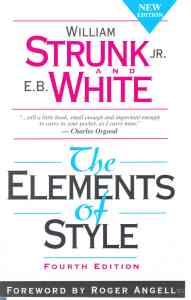
To Download Complete Book in PDF click the Download Button.
The Elements of Style
“The elements of Style by StrunkWhite” Download the complete PDF Book
Download the complete Book “The elements of Style by StrunkWhite.pdf” here:
Introduction:
This book is intended for use in English courses in which the practice of composition is combined with the study of literature. It aims to give in brief space the principal requirements of plain English style. It aims to lighten the task of instructor and student by concentrating attention (in Chapters II and III) on a few essentials, the rules of usage and principles of composition most commonly violated. The numbers of the sections may be used as references in correcting manuscript.
To Download Complete Book in PDF click the Download Button.
Complete Book “The Elements of Style” by Stunk and White
Here we are sharing the complete book “The Elements of Style” by Stunk and White.
It is a remarkable book for a person who wants to improve his professional correspondance. Hope it will be helpful for you.
Strunk, W., Jr. and White, E.B.
- ELEMENTARY RULES OF USAGE
- Form the possessive singular of nouns with ‘s.
- In a series of three or more terms with a single conjunction, use a comma after each term except the last.
- Enclose parenthetic expressions between commas.
- Place a comma before and or but introducing an independent clause.
- Do not join independent clauses by a comma.
- Do not break sentences in two.
- A participial phrase at the beginning of a sentence must refer to the grammatical subject.
- Divide words at line-ends, in accordance with their formation and pronunciation.
- Divide the word according to its formation:
- Divide “on the vowel:”
- Divide between double letters, unless they come at the end of the simple form of the word:
III. ELEMENTARY PRINCIPLES OF COMPOSITION
- Make the paragraph the unit of composition: one paragraph to each topic.
- As a rule, begin each paragraph with a topic sentence; end it in conformity with the beginning.
- Use the active voice. The active voice is usually more direct and vigorous than the passive:
- Put statements in positive form.
- Omit needless words.
- Avoid a succession of loose sentences.
- Express co-ordinate ideas in similar form.
- Keep related words together.
- In summaries, keep to one tense.
- Place the emphatic words of a sentence at the end.
- A FEW MATTERS OF FORM
- WORDS AND EXPRESSIONS COMMONLY MISUSED
- WORDS OFTEN MISSPELLED
I . INTRODUCTORY
This book is intended for use in English courses in which the practice of composition is combined with the study of literature. It aims to give in brief space the principal requirements of plain English style. It aims to lighten the task of instructor and student by concentrating attention (in Chapters II and III) on a few essentials, the rules of usage and principles of composition most commonly violated. The numbers of the sections may be used as references in correcting manuscript.
The book covers only a small portion of the field of English style, but the experience of its writer has been that once past the essentials, students profit most by individual instruction based on the problems of their own work, and that each instructor has his own body of theory, which he prefers to that offered by any textbook.
The writer’s colleagues in the Department of English in Cornell University have greatly helped him in the preparation of his manuscript. Mr. George McLane Wood has kindly consented to the inclusion under Rule 11 of some material from his Suggestions to Authors.
The following books are recommended for reference or further study: in connection with Chapters II and IV, F. Howard Collins, Author and Printer (Henry Frowde); Chicago University Press, Manual of Style; T. L. De Vinne Correct Composition (The Century Company); Horace Hart, Rules for Compositors and Printers (Oxford University Press); George McLane Wood, Extracts from the Style-Book of the Government Printing Office (United States Geological Survey); in connection with Chapters III and V, Sir Arthur Quiller-Couch, The Art of Writing (Putnams), especially the chapter, Interlude on Jargon; George McLane Wood, Suggestions to Authors (United States Geological Survey); John Leslie Hall, English Usage (Scott, Foresman and Co.); James P. Kelly, Workmanship in Words (Little, Brown and Co.)
It is an old observation that the best writers sometimes disregard the rules of rhetoric. When they do so, however, the reader will usually find in the sentence some compensating merit, attained at the cost of the violation. Unless he is certain of doing as well, he will probably do best to follow the rules. After he has learned, by their guidance, to write plain English adequate for everyday uses, let him look, for the secrets of style, to the study of the masters of literature.
II. ELEMENTARY RULES OF USAGE
1. Form the possessive singular of nouns with ‘s.
Follow this rule whatever the final consonant. Thus write,
Charles’s friend
Burns’s poems
the witch’s malice
This is the usage of the United States Government Printing Office and of the Oxford University Press.
Exceptions are the possessives of ancient proper names in -es and -is, the possessive Jesus’, and such forms as for conscience’ sake, for righteousness’ sake. But such forms as Achilles’ heel, Moses’ laws, Isis’ temple are commonly replaced by
the heel of Achilles
the laws of Moses
the temple of Isis
The pronominal possessives hers, its, theirs, yours, and oneself have no apostrophe.
2. In a series of three or more terms with a single conjunction, use a comma after each term except the last.
Thus write,
red, white, and blue
honest, energetic, but headstrong
He opened the letter, read it, and made a note of its contents.
This is also the usage of the Government Printing Office and of the Oxford University Press.
In the names of business firms the last comma is omitted, as
Brown, Shipley and Company
The abbreviation etc., even if only a single term comes before it, is always preceded by a comma.
3. Enclose parenthetic expressions between commas.
The best way to see a country, unless you are pressed for time, is to travel on foot.
This rule is difficult to apply; it is frequently hard to decide whether a single word, such as however, or a brief phrase, is or is not parenthetic. If the interruption to the flow of the sentence is but slight, the writer may safely omit the commas. But whether the interruption be slight or considerable, he must never omit one comma and leave the other. Such punctuation as
Marjorie’s husband, Colonel Nelson paid us a visit yesterday,
or
My brother you will be pleased to hear, is now in perfect health, is indefensible.
Non-restrictive relative clauses are, in accordance with this rule, set off by commas. The audience, which had at first been indifferent, became
more and more interested.
Similar clauses introduced by where and when are similarly punctuated.
In 1769, when Napoleon was born, Corsica had but recently been acquired by France.
Nether Stowey, where Coleridge wrote The Rime of the Ancient Mariner, is a few miles from Bridgewater.
In these sentences the clauses introduced by which, when, and where are nonrestrictive; they do not limit the application of the words on which they depend, but add, parenthetically, statements supplementing those in the principal clauses. Each sentence is a combination of two statements which might have been made independently.
The audience was at first indifferent. Later it became more and more interested.
Napoleon was born in 1769. At that time Corsica had but recently been acquired by France.
Coleridge wrote The Rime of the Ancient Mariner at
Nether Stowey. Nether Stowey is only a few miles from Bridgewater.
Restrictive relative clauses are not set off by commas.
The candidate who best meets these requirements will obtain the place.
In this sentence the relative clause restricts the application of the word candidate to a single person. Unlike those above, the sentence cannot be split into two independent statements.
The abbreviations etc. and jr. are always preceded by a comma, and except at the end of a sentence, followed by one.
Similar in principle to the enclosing of parenthetic expressions between commas is the setting off by commas of phrases or dependent clauses preceding or following the main clause of a sentence. The sentences quoted in this section and under Rules 4, 5, 6, 7, 16, and 18 should afford sufficient guidance.
If a parenthetic expression is preceded by a conjunction, place the first comma before the conjunction, not after it.
He saw us coming, and unaware that we had learned of his treachery, greeted us with a smile.
4. Place a comma before and or but introducing an independent clause.
The early records of the city have disappeared, and the story of its first years can no longer be reconstructed. The situation is perilous, but there is still one chance of escape.
Sentences of this type, isolated from their context, may seem to be in need of rewriting. As they make complete sense when the comma is reached, the second clause has the appearance of an after-thought. Further, and, is the least specific of connectives. Used between independent clauses, it indicates only that a relation exists between them without defining that relation. In the example above, the relation is that of cause and result. The two sentences might be rewritten:
As the early records of the city have disappeared, the story of its first years can no longer be reconstructed. Although the situation is perilous, there is still one chance of escape.
Or the subordinate clauses might be replaced by phrases:
Owing to the disappearance of the early records of the city, the story of its first years can no longer be reconstructed. In this perilous situation, there is still one chance of escape.
But a writer may err by making his sentences too uniformly compact and periodic, and an occasional loose sentence prevents the style from becoming too formal and gives the reader a certain relief. Consequently, loose sentences of the type first quoted are common in easy, unstudied writing. But a writer should be careful not to construct too many of his sentences after this pattern (see Rule 14).
Two-part sentences of which the second member is introduced by as (in the sense of because), for, or, nor, and while (in the sense of and at the same time) likewise require a comma before the conjunction.
If a dependent clause, or an introductory phrase requiring to be set off by a comma, precedes the second independent clause, no comma is needed after the conjunction.
The situation is perilous, but if we are prepared to act promptly, there is still one chance of escape.
For two-part sentences connected by an adverb, see the next section.
5. Do not join independent clauses by a comma.
If two or more clauses, grammatically complete and not joined by a conjunction, are to form a single compound sentence, the proper mark of punctuation is a semicolon.
Stevenson’s romances are entertaining; they are full of exciting adventures.
It is nearly half past five; we cannot reach town before dark.
It is of course equally correct to write the above as two sentences each, replacing the semicolons by periods.
Stevenson’s romances are entertaining. They are full of exciting adventures.
It is nearly half past five. We cannot reach town before dark.
If a conjunction is inserted, the proper mark is a comma (Rule 4).
Stevenson’s romances are entertaining, for they are full of exciting adventures.
It is nearly half past five, and we cannot reach town before dark.
Note that if the second clause is preceded by an adverb, such as accordingly, besides, so, then, therefore, or thus, and not by a conjunction, the semicolon is still required.
I had never been in the place before; so I had difficulty in finding my way about.
In general, however, it is best, in writing, to avoid using so in this manner; there is
danger that the writer who uses it at all may use it too often. A simple correction,
usually serviceable, is to omit the word so, and begin the first clause with as:
As I had never been in the place before, I had difficulty in finding my way about.
If the clauses are very short, and are alike in form, a comma is usually permissible:
Man proposes, God disposes.
The gate swung apart, the bridge fell, the portcullis was drawn up.
6. Do not break sentences in two.
In other words, do not use periods for commas.
I met them on a Cunard liner several years ago. Coming home from Liverpool to New York.
He was an interesting talker. A man who had traveled all over the world, and lived in half a dozen countries.
In both these examples, the first period should be replaced by a comma, and the following word begun with a small letter.
It is permissible to make an emphatic word or expression serve the purpose of a sentence and to punctuate it accordingly:
Again and again he called out. No reply.
The writer must, however, be certain that the emphasis is warranted, and that he will not be suspected of a mere blunder in punctuation.
Rules 3, 4, 5, and 6 cover the most important principles in the punctuation of ordinary sentences; they should be so thoroughly mastered that their application becomes second nature.
7. A participial phrase at the beginning of a sentence must refer to the grammatical subject.
Walking slowly down the road, he saw a woman accompanied by two children.
The word walking refers to the subject of the sentence, not to the woman. If the writer wishes to make it refer to the woman, he must recast the sentence:
He saw a woman, accompanied by two children, walking slowly down the road.
Participial phrases preceded by a conjunction or by a preposition, nouns in apposition, adjectives, and adjective phrases come under the same rule if they begin the sentence.
On arriving in Chicago, his friends met him at the station.
When he arrived (or, On his arrival) in Chicago, his friends met him at the station.
A soldier of proved valor, they entrusted him with the defence of the city.
A soldier of proved valor, he was entrusted with the defence of the city.
Young and inexperienced, the task seemed easy to me.
Young and inexperienced, I thought the task easy.
Without a friend to counsel him, the temptation proved irresistible.
Without a friend to counsel him, he found the temptation irresistible.
Sentences violating this rule are often ludicrous.
Being in a dilapidated condition, I was able to buy the house very cheap.
8. Divide words at line-ends, in accordance with their formation and pronunciation.
If there is room at the end of a line for one or more syllables of a word, but not for the whole word, divide the word, unless this involves cutting off only a single letter, or cutting off only two letters of a long word. No hard and fast rule for all words can be laid down. The principles most frequently applicable are:
a. Divide the word according to its formation:
know-ledge (not knowl-edge); Shake-speare (not Shakespeare); de-scribe (not des-cribe); atmo-sphere (not atmos-phere);
b. Divide “on the vowel:”
edi-ble (not ed-ible); propo-sition; ordi-nary; espe-cial; reli-gious; oppo-nents; regu-lar; classi-fi-ca-tion (three divisions possible); deco-rative; presi-dent;
c. Divide between double letters, unless they come at the end of the simple form of the word:
Apen-nines; Cincin-nati; refer-ring; but tell-ing.
The treatment of consonants in combination is best shown from examples:
for-tune; pic-ture; presump-tuous; illus-tration; sub-stan-tial (either division); indus-try; instruc-tion; sug-ges-tion; incen-diary.
The student will do well to examine the syllable-division in a number of pages of any carefully printed book.
III. ELEMENTARY PRINCIPLES OF COMPOSITION
9. Make the paragraph the unit of composition: one paragraph to each topic.
If the subject on which you are writing is of slight extent, or if you intend to treat it very briefly, there may be no need of subdividing it into topics. Thus a brief description, a brief summary of a literary work, a brief account of a single incident, a narrative merely outlining an action, the setting forth of a single idea, any one of these is best written in a single paragraph. After the paragraph has been written, it should be examined to see whether subdivision will not improve it.
Ordinarily, however, a subject requires subdivision into topics, each of which should be made the subject of a paragraph. The object of treating each topic in a paragraph by itself is, of course, to aid the reader. The beginning of each paragraph is a signal to him that a new step in the development of the subject has been reached.
The extent of subdivision will vary with the length of the composition. For example, a short notice of a book or poem might consist of a single paragraph. One slightly longer might consist of two paragraphs:
- Account of the work.
- Critical discussion. A report on a poem, written for a class in literature, might consist of seven paragraphs:
A report on a poem, written for a class in literature, might consist of seven paragraphs:
- Facts of composition and publication.
- Kind of poem; metrical form.
- Subject.
- Treatment of subject.
- For what chiefly remarkable.
- Wherein characteristic of the writer.
- Relationship to other works.
The contents of paragraphs C and D would vary with the poem. Usually, paragraph C would indicate the actual or imagined circumstances of the poem (the situation), if these call for explanation, and would then state the subject and outline its development. If the poem is a narrative in the third person throughout, paragraph C need contain no more than a concise summary of the action. Paragraph D would indicate the leading ideas and show how they are made prominent, or would indicate what points in the narrative are chiefly emphasized. A novel might be discussed under the heads:
- Setting.
- Plot.
- Characters.
- Purpose.
A historical event might be discussed under the heads:
- What led up to the event.
- Account of the event.
- What the event led up to.
In treating either of these last two subjects, the writer would probably find it necessary to subdivide one or more of the topics here given.
As a rule, single sentences should not be written or printed as paragraphs. An exception may be made of sentences of transition, indicating the relation between the parts of an exposition or argument.
In dialogue, each speech, even if only a single word, is a paragraph by itself; that is, a new paragraph begins with each change of speaker. The application of this rule, when dialogue and narrative are combined, is best learned from examples in wellprinted works of fiction.
10. As a rule, begin each paragraph with a topic sentence; end it in conformity with the beginning.
Again, the object is to aid the reader. The practice here recommended enables him to discover the purpose of each paragraph as he begins to read it, and to retain the purpose in mind as he ends it. For this reason, the most generally useful kind of paragraph, particularly in exposition and argument, is that in which
- the topic sentence comes at or near the beginning;
- the succeeding sentences explain or establish or develop the statement made in the topic sentence; and
- the final sentence either emphasizes the thought of the topic sentence or states some important consequence.
Ending with a digression, or with an unimportant detail, is particularly to be avoided.
If the paragraph forms part of a larger composition, its relation to what precedes, or its function as a part of the whole, may need to be expressed. This can sometimes be done by a mere word or phrase (again; therefore; for the same reason) in the topic sentence. Sometimes, however, it is expedient to precede the topic sentence by one or more sentences of introduction or transition. If more than one such sentence is required, it is generally better to set apart the transitional sentences as a separate paragraph.
According to the writer’s purpose, he may, as indicated above, relate the body of the paragraph to the topic sentence in one or more of several different ways. He may make the meaning of the topic sentence clearer by restating it in other forms, by defining its terms, by denying the converse, by giving illustrations or specific instances; he may establish it by proofs; or he may develop it by showing its implications and consequences. In a long paragraph, he may carry out several of these processes.
| 1 | Now, to be properly enjoyed, a walking tour should be gone upon alone. | 1 | Topic sentence. |
| 2 | If you go in a company, or even in pairs, it is no longer a walking tour in anything but name; it is something else and more in the nature of a picnic. | 2 | The meaning made clearer by denial of the contrary. |
| 3 | A walking tour should be gone upon alone, because freedom is of the essence; because you should be able to stop and go on, and follow this way or that, as the freak takes you; and because you must have your own pace, and neither trot alongside a champion walker, nor mince in time with a girl. | 3 | The topic sentence repeated, in abridged form, and supported by three reasons; the meaning of the third (“you must have your own pace”) made clearer by denying the converse. |
| 4 | And you must be open to all impressions and let your thoughts take colour from what you see. | 4 | A fourth reason, stated in two forms. |
| 5 | You should be as a pipe for any wind to play upon. | 5 | The same reason, stated in still another form. |
| 6 | “I cannot see the wit,” says Hazlitt, “of walking and talking at the same time. | 6-7 | The same reason as stated by Hazlitt. |
| 7 | When I am in the country, I wish to vegetate like the country,” which is the gist of all that can be said upon the matter. | ||
| 8 | There should be no cackle of voices at your elbow, to jar on the meditative silence of the morning. | 8 | Repetition, in paraphrase, of the quotation from Hazlitt. |
| 9 | And so long as a man is reasoning he cannot surrender himself to that fine intoxication that comes of much motion in the open air, that begins in a sort of dazzle and sluggishness of the brain, and ends in a peace that passes comprehension.–Stevenson, Walking Tours. | 9 | Final statement of the fourth reason, in language amplified and heightened to form a strong conclusion. |
| 1 | It was chiefly in the eighteenth century that a very different conception of history grew up. | 1 | Topic sentence. |
| 2 | Historians then came to believe that their task was not so much to paint a picture as to solve a problem; to explain or illustrate the successive phases of national growth, prosperity, and adversity. | 2 | The meaning of the topic sentence made clearer; the new conception of history defined. |
| 3 | The history of morals, of industry, of intellect, and of art; the changes that take place in manners or beliefs; the dominant ideas that prevailed in successive periods; the rise, fall, and modification of political constitutions; in a word, all the conditions of national well-being became the subjects of their works. | 3 | The definition expanded. |
| 4 | They sought rather to write a history of peoples than a history of kings. | 4 | The definition explained by contrast. |
| 5 | They looked especially in history for the chain of causes and effects. | 5 | The definition supplemented: another element in the new conception of history. |
| 6 | They undertook to study in the past the physiology of nations, and hoped by applying the experimental method on a large scale to deduce some lessons of real value about the conditions on which the welfare of society mainly depend.–Lecky, The Political Value of History | 6 | Conclusion: an important consequence of the new conception of history. |
In narration and description the paragraph sometimes begins with a concise, comprehensive statement serving to hold together the details that follow. The breeze served us admirably.
The campaign opened with a series of reverses.
The next ten or twelve pages were filled with a curious set of entries.
But this device, if too often used, would become a mannerism. More commonly the opening sentence simply indicates by its subject with what the paragraph is to be principally concerned.
At length I thought I might return towards the stockade.
He picked up the heavy lamp from the table and began to explore.
Another flight of steps, and they emerged on the roof.
The brief paragraphs of animated narrative, however, are often without even this semblance of a topic sentence. The break between them serves the purpose of a rhetorical pause, throwing into prominence some detail of the action.
11. Use the active voice. The active voice is usually more direct and vigorous than the passive:
I shall always remember my first visit to Boston.
This is much better than
My first visit to Boston will always be remembered by me.
The latter sentence is less direct, less bold, and less concise. If the writer tries to make it more concise by omitting “by me,”
My first visit to Boston will always be remembered,
it becomes indefinite: is it the writer, or some person undisclosed, or the world at large, that will always remember this visit?
This rule does not, of course, mean that the writer should entirely discard the passive voice, which is frequently convenient and sometimes necessary.
The dramatists of the Restoration are little esteemed today.
Modern readers have little esteem for the dramatists of the Restoration.
The first would be the right form in a paragraph on the dramatists of the Restoration; the second, in a paragraph on the tastes of modern readers. The need of making a particular word the subject of the sentence will often, as in these examples, determine which voice is to be used.
The habitual use of the active voice, however, makes for forcible writing. This is true not only in narrative principally concerned with action, but in writing of any kind. Many a tame sentence of description or exposition can be made lively and emphatic by substituting a transitive in the active voice for some such perfunctory expression as there is, or could be heard.
There were a great number of dead leaves lying on the ground.
Dead leaves covered the ground.
The sound of the falls could still be heard.
The sound of the falls still reached our ears.
The reason that he left college was that his health became impaired.
Failing health compelled him to leave college.
It was not long before he was very sorry that he had said what he had.
He soon repented his words.
As a rule, avoid making one passive depend directly upon another.
Gold was not allowed to be exported.
It was forbidden to export gold (The export of gold was prohibited).
He has been proved to have been seen entering the building.
It has been proved that he was seen to enter the building.
In both the examples above, before correction, the word properly related to the second passive is made the subject of the first.
A common fault is to use as the subject of a passive construction a noun which expresses the entire action, leaving to the verb no function beyond that of completing the sentence.
A survey of this region was made in 1900.
This region was surveyed in 1900.
Mobilization of the army was rapidly carried out.
The army was rapidly mobilized.
Confirmation of these reports cannot be obtained.
These reports cannot be confirmed.
Compare the sentence, “The export of gold was prohibited,” in which the predicate “was prohibited” expresses something not implied in “export.”
12. Put statements in positive form.
Make definite assertions. Avoid tame, colorless, hesitating, non-committal language. Use the word not as a means of denial or in antithesis, never as a means of evasion.
He was not very often on time.
He usually came late.
He did not think that studying Latin was much use.
He thought the study of Latin useless.
The Taming of the Shrew is rather weak in spots.
Shakespeare does not portray Katharine as a very admirable character, nor does Bianca remain long in memory as an important character in Shakespeare’s works.
The women in The Taming of the Shrew are unattractive.
Katharine is disagreeable, Bianca insignificant.
The last example, before correction, is indefinite as well as negative. The corrected version, consequently, is simply a guess at the writer’s intention.
All three examples show the weakness inherent in the word not. Consciously or unconsciously, the reader is dissatisfied with being told only what is not; he wishes to be told what is. Hence, as a rule, it is better to express a negative in positive form.
not honest dishonest
not important trifling
did not remember forgot
did not pay any attention to ignored
did not have much confidence in distrusted
The antithesis of negative and positive is strong:
Not charity, but simple justice.
Not that I loved Caesar less, but Rome the more.
Negative words other than not are usually strong:
The sun never sets upon the British flag.
13. Omit needless words.
Vigorous writing is concise. A sentence should contain no unnecessary words, a paragraph no unnecessary sentences, for the same reason that a drawing should have no unnecessary lines and a machine no unnecessary parts. This requires not that the writer make all his sentences short, or that he avoid all detail and treat his subjects only in outline, but that every word tell. Many expressions in common use violate this principle:
the question as to whether whether (the question whether)
there is no doubt but that no doubt (doubtless)
used for fuel purposes used for fuel
he is a man who he in a hasty manner hastily
this is a subject which this subject
His story is a strange one. His story is strange.
In especial the expression the fact that should be revised out of every sentence in which it occurs.
owing to the fact that since (because)
in spite of the fact that though (although)
call your attention to the fact that remind you (notify you)
I was unaware of the fact that I was unaware that (did not know)
the fact that he had not succeeded his failure
the fact that I had arrived my arrival
See also under case, character, nature, system in Chapter V. Who is, which was, and the like are often superfluous.
His brother, who is a member of the same firm
His brother, a member of the same firm
Trafalgar, which was Nelson’s last battle
Trafalgar, Nelson’s last battle
As positive statement is more concise than negative, and the active voice more concise than the passive, many of the examples given under Rules 11 and 12 illustrate this rule as well.
A common violation of conciseness is the presentation of a single complex idea, step by step, in a series of sentences which might to advantage be combined into one.
Macbeth was very ambitious. This led him to wish to become king of Scotland. The witches told him that this wish of his would come true. The king of Scotland at this
time was Duncan. Encouraged by his wife, Macbeth murdered Duncan. He was thus enabled to succeed Duncan as king. (55 words.) Encouraged by his wife, Macbeth achieved his ambition and realized the prediction of the witches by murdering Duncan and becoming king of Scotland in his place. (26 words.)
14. Avoid a succession of loose sentences.
This rule refers especially to loose sentences of a particular type, those consisting of two co-ordinate clauses, the second introduced by a conjunction or relative. Although single sentences of this type may be unexceptionable (see under Rule 4), a series soon becomes monotonous and tedious.
An unskilful writer will sometimes construct a whole paragraph of sentences of this kind, using as connectives and, but, and less frequently, who, which, when, where, and while, these last in non-restrictive senses (see under Rule 3).
The third concert of the subscription series was given last evening, and a large audience was in attendance. Mr. Edward Appleton was the soloist, and the Boston Symphony Orchestra furnished the instrumental music. The former showed himself to be an artist of the first rank, while the latter proved itself fully deserving of its high reputation. The interest aroused by the series has been very gratifying to the Committee, and it is planned to give a similar series annually hereafter. The fourth concert will be given on Tuesday, May 10, when an equally attractive programme will be presented.
Apart from its triteness and emptiness, the paragraph above is bad because of the structure of its sentences, with their mechanical symmetry and sing-song. Contrast with them the sentences in the paragraphs quoted under Rule 10, or in any piece of good English prose, as the preface (Before the Curtain) to Vanity Fair.
If the writer finds that he has written a series of sentences of the type described, he should recast enough of them to remove the monotony, replacing them by simple sentences, by sentences of two clauses joined by a semicolon, by periodic sentences of two clauses, by sentences, loose or periodic, of three clauses–whichever best represent the real relations of the thought.
15. Express co-ordinate ideas in similar form.
This principle, that of parallel construction, requires that expressions of similar content and function should be outwardly similar. The likeness of form enables the reader to recognize more readily the likeness of content and function. Familiar instances from the Bible are the Ten Commandments, the Beatitudes, and the petitions of the Lord’s Prayer.
The unskilful writer often violates this principle, from a mistaken belief that he should constantly vary the form of his expressions. It is true that in repeating a statement in order to emphasize it he may have need to vary its form. For illustration, see the paragraph from Stevenson quoted under Rule 10. But apart from this, he should follow the principle of parallel construction.
Formerly, science was taught by the textbook method, while now the laboratory method is employed.
Formerly, science was taught by the textbook method; now it is taught by the laboratory method.
The left-hand version gives the impression that the writer is undecided or timid; he seems unable or afraid to choose one form of expression and hold to it. The righthand version shows that the writer has at least made his choice and abided by it.
By this principle, an article or a preposition applying to all the members of a series must either be used only before the first term or else be repeated before each term.
The French, the Italians, Spanish, and Portuguese
The French, the Italians, the Spanish, and the Portuguese
In spring, summer, or in winter
In spring, summer, or winter (In spring, in summer, or in winter)
Correlative expressions (both, and; not, but; not only, but also; either, or; first, second, third; and the like) should be followed by the same grammatical construction. Many violations of this rule can be corrected by rearranging the sentence.
It was both a long ceremony and very tedious.
The ceremony was both long and tedious.
A time not for words, but action
A time not for words, but for action
Either you must grant his request or incur his ill will.
You must either grant his request or incur his ill will.
My objections are, first, the injustice of the measure; second, that it is unconstitutional.
My objections are, first, that the measure is unjust; second, that it is unconstitutional.
See also the third example under Rule 12 and the last under Rule 13.
It may be asked, what if a writer needs to express a very large number of similar ideas, say twenty? Must he write twenty consecutive sentences of the same pattern?
On closer examination he will probably find that the difficulty is imaginary, that his twenty ideas can be classified in groups, and that he need apply the principle only within each group. Otherwise he had best avoid the difficulty by putting his statements in the form of a table.
16. Keep related words together.
The position of the words in a sentence is the principal means of showing their relationship. The writer must therefore, so far as possible, bring together the words, and groups of words, that are related in thought, and keep apart those which are not so related.
The subject of a sentence and the principal verb should not, as a rule, be separated by a phrase or clause that can be transferred to the beginning.
Wordsworth, in the fifth book of The Excursion, gives a minute description of this church.
In the fifth book of The Excursion, Wordsworth gives a minute description of this church.
Cast iron, when treated in a Bessemer converter, is changed into steel.
By treatment in a Bessemer converter, cast iron is changed into steel.
The objection is that the interposed phrase or clause needlessly interrupts the natural order of the main clause. This objection, however, does not usually hold when the order is interrupted only by a relative clause or by an expression in apposition. Nor does it hold in periodic sentences in which the interruption is a deliberately used means of creating suspense (see examples under Rule 18).
The relative pronoun should come, as a rule, immediately after its antecedent. There was a look in his eye that boded mischief.
In his eye was a look that boded mischief.
He wrote three articles about his adventures in Spain, which were published in Harper’s Magazine.
He published in Harper’s Magazine three articles about his adventures in Spain.
This is a portrait of Benjamin Harrison, grandson of William Henry Harrison, who became President in 1889.
This is a portrait of Benjamin Harrison, grandson of William Henry Harrison. He became President in 1889.
If the antecedent consists of a group of words, the relative comes at the end of the group, unless this would cause ambiguity.
The Superintendent of the Chicago Division, who
A proposal to amend the Sherman Act, which has been variously judged
A proposal, which has been variously judged, to amend the Sherman Act
A proposal to amend the much-debated Sherman Act
The grandson of William Henry Harrison, who
William Henry Harrison’s grandson, Benjamin Harrison, who
A noun in apposition may come between antecedent and relative, because in such a combination no real ambiguity can arise.
The Duke of York, his brother, who was regarded with hostility by the Whigs
Modifiers should come, if possible next to the word they modify. If several expressions modify the same word, they should be so arranged that no wrong relation is suggested.
All the members were not present.
Not all the members were present.
He only found two mistakes.
He found only two mistakes.
Major R. E. Joyce will give a lecture on Tuesday evening in Bailey Hall, to which the public is invited, on “My Experiences in Mesopotamia” at eight P. M.
On Tuesday evening at eight P. M., Major R. E. Joyce will give in Bailey
Hall a lecture on “My Experiences in Mesopotamia.” The public is invited.
17. In summaries, keep to one tense.
In summarizing the action of a drama, the writer should always use the present tense. In summarizing a poem, story, or novel, he should preferably use the present, though he may use the past if he prefers. If the summary is in the present tense, antecedent action should be expressed by the perfect; if in the past, by the past perfect.
An unforeseen chance prevents Friar John from delivering
Friar Lawrence’s letter to Romeo. Juliet, meanwhile, owing to her father’s arbitrary change of the day set for her wedding, has been compelled to drink the potion on
Tuesday night, with the result that Balthasar informs Romeo of her supposed death before Friar Lawrence learns of the nondelivery of the letter.
But whichever tense be used in the summary, a past tense in indirect discourse or in indirect question remains unchanged.
The Legate inquires who struck the blow.
Apart from the exceptions noted, whichever tense the writer chooses, he should use throughout. Shifting from one tense to the other gives the appearance of uncertainty and irresolution (compare Rule 15).
In presenting the statements or the thought of some one else, as in summarizing an essay or reporting a speech, the writer should avoid intercalating such expressions as “he said,” “he stated,” “the speaker added,” “the speaker then went on to say,” “the author also thinks,” or the like. He should indicate clearly at the outset, once for all, that what follows is summary, and then waste no words in repeating the notification.
In notebooks, in newspapers, in handbooks of literature, summaries of one kind or another may be indispensable, and for children in primary schools it is a useful exercise to retell a story in their own words. But in the criticism or interpretation of literature the writer should be careful to avoid dropping into summary. He may find it necessary to devote one or two sentences to indicating the subject, or the opening situation, of the work he is discussing; he may cite numerous details to illustrate its qualities. But he should aim to write an orderly discussion supported by evidence, not a summary with occasional comment. Similarly, if the scope of his discussion includes a number of works, he will as a rule do better not to take them up singly in chronological order, but to aim from the beginning at establishing general conclusions.
18. Place the emphatic words of a sentence at the end.
The proper place for the word, or group of words, which the writer desires to make most prominent is usually the end of the sentence.
Humanity has hardly advanced in fortitude since that time, though it has advanced in many other ways.
Humanity, since that time, has advanced in many other ways, but it has hardly advanced in fortitude.
This steel is principally used for making razors, because of its hardness.
Because of its hardness, this steel is principally used in making razors.
The word or group of words entitled to this position of prominence is usually the logical predicate, that is, the new element in the sentence, as it is in the second example.
The effectiveness of the periodic sentence arises from the prominence which it gives to the main statement.
Four centuries ago, Christopher Columbus, one of the
Italian mariners whom the decline of their own republics had put at the service of the world and of adventure, seeking for Spain a westward passage to the Indies as a set-off against the achievements of Portuguese discoverers, lighted on America.
With these hopes and in this belief I would urge you, laying aside all hindrance, thrusting away all private aims, to devote yourselves unswervingly and unflinchingly to the vigorous and successful prosecution of this war.
The other prominent position in the sentence is the beginning. Any element in the sentence, other than the subject, becomes emphatic when placed first.
Deceit or treachery he could never forgive.
So vast and rude, fretted by the action of nearly three thousand years, the fragments of this architecture may often seem, at first sight, like works of nature.
A subject coming first in its sentence may be emphatic, but hardly by its position alone. In the sentence,
Great kings worshipped at his shrine,
the emphasis upon kings arises largely from its meaning and from the context. To receive special emphasis, the subject of a sentence must take the position of the predicate.
Through the middle of the valley flowed a winding stream.
The principle that the proper place for what is to be made most prominent is the end applies equally to the words of a sentence, to the sentences of a paragraph, and to the paragraphs of a composition.
IV. A FEW MATTERS OF FORM
Headings. Leave a blank line, or its equivalent in space, after the title or heading of a manuscript. On succeeding pages, if using ruled paper, begin on the first line.
Numerals. Do not spell out dates or other serial numbers. Write them in figures or in Roman notation, as may be appropriate.
August 9, 1918 Chapter XII
Rule 3 352d Infantry
Parentheses. A sentence containing an expression in parenthesis is punctuated, outside of the marks of parenthesis, exactly as if the expression in parenthesis were absent. The expression within is punctuated as if it stood by itself, except that the final stop is omitted unless it is a question mark or an exclamation point.
I went to his house yesterday (my third attempt to see him), but he had left town.
He declares (and why should we doubt his good faith?) that he is now certain of success.
(When a wholly detached expression or sentence is parenthesized, the final stop comes before the last mark of parenthesis.)
Quotations. Formal quotations, cited as documentary evidence, are introduced by a colon and enclosed in quotation marks.
The provision of the Constitution is: “No tax or duty shall be laid on articles exported from any state.”
Quotations grammatically in apposition or the direct objects of verbs are preceded by a comma and enclosed in quotation marks.
I recall the maxim of La Rochefoucauld, “Gratitude is a
lively sense of benefits to come.”
Aristotle says, “Art is an imitation of nature.”
Quotations of an entire line, or more, of verse, are begun on a fresh line and centred, but not enclosed in quotation marks.
Wordsworth’s enthusiasm for the Revolution was at first unbounded:
Bliss was it in that dawn to be alive,
But to be young was very heaven!
Quotations introduced by that are regarded as in indirect discourse and not enclosed in quotation marks.
Keats declares that beauty is truth, truth beauty.
Proverbial expressions and familiar phrases of literary origin require no quotation marks.
These are the times that try men’s souls.
He lives far from the madding crowd.
The same is true of colloquialisms and slang.
References. In scholarly work requiring exact references, abbreviate titles that occur frequently, giving the full forms in an alphabetical list at the end. As a general practice, give the references in parenthesis or in footnotes, not in the body of the sentence. Omit the words act, scene, line, book, volume, page, except when referring by only one of them. Punctuate as indicated below.
In the second scene of the third act
In III.ii (still better, simply insert III.ii in parenthesis at the proper place in the sentence)
After the killing of Polonius, Hamlet is placed under guard (IV. ii. 14).
2 Samuel i:17-27 Othello II.iii 264-267, III.iii. 155-161
Titles. For the titles of literary works, scholarly usage prefers italics with capitalized initials. The usage of editors and publishers varies, some using italics with capitalized initials, others using Roman with capitalized initials and with or without quotation marks. Use italics (indicated in manuscript by underscoring), except in writing for a periodical that follows a different practice. Omit initial A or The from titles when you place the possessive before them.
The Iliad; the Odyssey; As You Like It; To a Skylark; The New comes; A Tale of Two Cities; Dicken’s Tale of Two Cities.
V. WORDS AND EXPRESSIONS COMMONLY MISUSED
(Many of the words and expressions here listed are not so much bad English as bad style, the commonplaces of careless writing. As illustrated under Feature, the proper correction is likely to be not the replacement of one word or set of words by another, but the replacement of vague generality by definite statement.)
All right. Idiomatic in familiar speech as a detached phrase in the sense, “Agreed,” or “Go ahead.” In other uses better avoided. Always written as two words.
As good or better than. Expressions of this type should be corrected by rearranging the sentence.
My opinion is as good or better than his.
My opinion is as good as his, or better (if not better).
As to whether. Whether is sufficient; see under Rule 13.
Bid. Takes the infinitive without to. The past tense is bade.
Case. The Concise Oxford Dictionary begins its definition of this word: “instance of a thing’s occurring; usual state of affairs.” In these two senses, the word is usually unnecessary.
In many cases, the rooms were poorly ventilated.
Many of the rooms were poorly ventilated.
It has rarely been the case that any mistake has been made.
Few mistakes have been made.
See Wood, Suggestions to Authors, pp. 68-71, and Quiller-Couch, The Art of Writing, pp. 103-106.
Certainly. Used indiscriminately by some speakers, much as others use very, to intensify any and every statement. A mannerism of this kind, bad in speech, is even worse in writing.
Character. Often simply redundant, used from a mere habit of wordiness.
Acts of a hostile character
Hostile acts
Claim, vb. With object-noun, means lay claim to. May be used with a dependent clause if this sense is clearly involved:
“He claimed that he was the sole surviving heir.”
(But even here, “claimed to be” would be better.) Not to be used as a substitute for declare, maintain, or charge.
Compare. To compare to is to point out or imply resemblances, between objects regarded as essentially of different order; to compare with is mainly to point out differences, between objects regarded as essentially of the same order.
Thus life has been compared to a pilgrimage, to a drama, to a battle;
Congress may be compared with the British Parliament.
Paris has been compared to ancient Athens; it may be compared with modern London.
Clever. This word has been greatly overused; it is best restricted to ingenuity displayed in small matters.
Consider. Not followed by as when it means, “believe to be.” “I consider him thoroughly competent.” Compare, “The lecturer considered Cromwell first as soldier and second as administrator,” where “considered” means “examined” or “discussed.”
Dependable. A needless substitute for reliable, trustworthy.
Due to. Incorrectly used for through, because of, or owing to, in adverbial phrases: “He lost the first game, due to carelessness.” In correct use related as predicate or as modifier to a particular noun: “This invention is due to Edison;” “losses due to preventable fires.”
Effect. As noun, means result; as verb, means to bring about, accomplish (not to be confused with affect, which means “to influence”). As noun, often loosely used in perfunctory writing about fashions, music, painting, and other arts: “an Oriental effect;” “effects in pale green;” “very delicate effects;” “broad effects;” “subtle effects;” “a charming effect was produced by.” The writer who has a definite meaning to express will not take refuge in such vagueness.
Etc. Not to be used of persons. Equivalent to and the rest, and so forth, and hence not to be used if one of these would be insufficient, that is, if the reader would be left in doubt as to any important particulars. Least open to objection when it represents the last terms of a list already given in full, or immaterial words at the end of a quotation. At the end of a list introduced by such as, for example, or any similar expression, etc. is incorrect.
Fact. Use this word only of matters of a kind capable of direct verification, not of matters of judgment. That a particular event happened on a given date, that lead melts at a certain temperature, are facts. But such conclusions as that Napoleon was the greatest of modern generals, or that the climate of California is delightful, however incontestable they may be, are not properly facts. On the formula the fact that, see under Rule 13.
Factor. A hackneyed word; the expressions of which it forms part can usually be replaced by something more direct and idiomatic.
His superior training was the great factor in his winning the match.
He won the match by being better trained.
Heavy artillery is becoming an increasingly important factor in deciding battles.
Heavy artillery is playing a larger and larger part in deciding battles.
Feature. Another hackneyed word; like factor it usually adds nothing to the sentence in which it occurs.
A feature of the entertainment especially worthy of mention was the singing of Miss A.
(Better use the same number of words to tell what Miss A. sang, or if the programme has already been given, to tell something of how she sang.) As a verb, in the advertising sense of offer as a special attraction, to be avoided.
Fix. Colloquial in America for arrange, prepare, mend. In writing restrict it to its literary senses, fasten, make firm or immovable, etc.
He is a man who. A common type of redundant expression; see Rule 13.
He is a man who is very ambitious.
He is very ambitious.
Spain is a country which I have always wanted to visit.
I have always wanted to visit Spain.
However. In the meaning nevertheless, not to come first in its sentence or clause. The roads were almost impassable.
However, we at last succeeded in reaching camp.
The roads were almost impassable. At last, however, we succeeded in reaching camp.
When however comes first, it means in whatever way or to whatever extent.
However you advise him, he will probably do as he thinks best.
However discouraging the prospect, he never lost heart.
Kind of. Not to be used as a substitute for rather (before adjectives and verbs), or except in familiar style, for something like (before nouns). Restrict it to its literal sense: “Amber is a kind of fossil resin;” “I dislike that kind of notoriety.” The same holds true of sort of.
Less. Should not be misused for fewer.
He had less men than in the previous campaign.
He had fewer men than in the previous campaign.
Less refers to quantity, fewer to number. “His troubles are less than mine” means “His troubles are not so great as mine.” “His troubles are fewer than mine” means “His troubles are not so numerous as mine.” It is, however, correct to say, “The signers of the petition were less than a hundred, “where the round number, a hundred, is something like a collective noun, and less is thought of as meaning a less quantity or amount.
Line, along these lines. Line in the sense of course of procedure, conduct, thought, is allowable, but has been so much overworked, particularly in the phrase along these lines, that a writer who aims at freshness or originality had better discard it entirely.
Mr. B. also spoke along the same lines.
Mr. B. also spoke, to the same effect.
He is studying along the line of French literature.
He is studying French literature.
Literal, literally. Often incorrectly used in support of exaggeration or violent metaphor.
A literal flood of abuse
A flood of abuse
Literally dead with fatigue
Almost dead with fatigue (dead tired)
Lose out. Meant to be more emphatic than lose, but actually less so, because of its commonness. The same holds true of try out, win out, sign up, register up. With a number of verbs, out and up form idiomatic combinations: find out, run out, turn out, cheer up, dry up, make up, and others, each distinguishable in meaning from the simple verb. Lose out is not.
Most. Not to be used for almost.
Most everybody
Almost everybody
Most all the time
Almost all the time
Nature. Often simply redundant, used like character.
Acts of a hostile nature
Hostile acts
Often vaguely used in such expressions as “a lover of nature;” “poems about nature.” Unless more specific statements follow, the reader cannot tell whether the poems have to do with natural scenery, rural life, the sunset, the untracked wilderness, or the habits of squirrels.
Near by. Adverbial phrase, not yet fully accepted as good English, though the analogy of close by and hard by seems to justify it. Near, or near at hand, is as good, if not better. Not to be used as an adjective; use neighboring.
Oftentimes, ofttimes. Archaic forms, no longer in good use. The modern word is often.
One hundred and one. Retain the and in this and similar expressions, in accordance with the unvarying usage of English prose from Old English times.
One of the most. Avoid beginning essays or paragraphs with this formula, as, “One of the most interesting developments of modern science is, etc.;”
“Switzerland is one of the most interesting countries of Europe.”
There is nothing wrong in this; it is simply threadbare and forcible-feeble.
People. The people is a political term, not to be confused with the public. From the people comes political support or opposition; from the public comes artistic appreciation or commercial patronage. The word people is not to be used with words of number, in place of persons. If of “six people” five went away, how many “people” would be left?
Phase. Means a stage of transition or development: “the phases of the moon;” “the last phase.” Not to be used for aspect or topic.
Another phase of the subject
Another point (another question)
Possess. Not to be used as a mere substitute for have or own.
He possessed great courage.
He had great courage (was very brave).
He was the fortunate possessor of
He owned
Respective, respectively. These words may usually be omitted with advantage.
Works of fiction are listed under the names of their respective authors.
Works of fiction are listed under the names of their authors.
The one mile and two mile runs were won by Jones and Cummings respectively.
The one mile and two mile runs were won by Jones and by Cummings.
In some kinds of formal writing, as in geometrical proofs, it may be necessary to use respectively, but it should not appear in writing on ordinary subjects.
So. Avoid, in writing, the use of so as an intensifier: “so good;” “so warm;” “so delightful.” On the use of so to introduce clauses, see Rule 4.
Sort of. See under Kind of.
State. Not to be used as a mere substitute for say, remark. Restrict it to the sense of express fully or clearly, as, “He refused to state his objections.”
Student body. A needless and awkward expression, meaning no more than thesimple word students.
A member of the student body
A student
Popular with the student body
Liked by the students
The student body passed resolutions.
The students passed resolutions.
System. Frequently used without need.
Dayton has adopted the commission system of government.
Dayton has adopted government by commission.
The dormitory system Dormitories
Thanking you in advance. This sounds as if the writer meant, “It will not be worth my while to write to you again.” Simply write, “Thanking you,” and if the favor which you have requested is granted, write a letter of acknowledgment.
They. A common inaccuracy is the use of the plural pronoun when the antecedent is a distributive expression such as each, each one, everybody, every one, many a man, which, though implying more than one person, requires the pronoun to be in the singular. Similar to this, but with even less justification, is the use of the plural pronoun with the antecedent anybody, any one, somebody, some one, the intention being either to avoid the awkward “he or she,” or to avoid committing oneself to either. Some bashful speakers even say, “A friend of mine told me that they, etc. “Use he with all the above words, unless the antecedent is or must be feminine.
Very. Use this word sparingly. Where emphasis is necessary, use words strong in themselves.
Viewpoint. Write point of view, but do not misuse this, as many do, for view or opinion.
While. Avoid the indiscriminate use of this word for and, but, and although. Many writers use it frequently as a substitute for and or but, either from a mere desire to vary the connective, or from uncertainty which of the two connectives is the more appropriate. In this use it is best replaced by a semicolon.
The office and salesrooms are on the ground floor, while the rest of the building is devoted to manufacturing.
The office and salesrooms are on the ground floor; the rest of the building is devoted to manufacturing.
Its use as a virtual equivalent of although is allowable in sentences where this leads to no ambiguity or absurdity.
While I admire his energy, I wish it were employed in a better cause.
This is entirely correct, as shown by the paraphrase,
I admire his energy; at the same time I wish it were employed in a better cause.
Compare:
While the temperature reaches 90 or 95 degrees in the daytime, the nights are often chilly.
Although the temperature reaches 90 or 95 degrees in the daytime, the nights are often chilly.
The paraphrase,
The temperature reaches 90 or 95 degrees in the daytime; at the same time the nights are often chilly,
shows why the use of while is incorrect. In general, the writer will do well to use while only with strict literalness, in the sense of during the time that.
Whom. Often incorrectly used for who before he said or similar expressions, when it is really the subject of a following verb.
His brother, whom he said would send him the money
His brother, who he said would send him the money
The man whom he thought was his friend
The man who (that) he thought was his friend (whom he thought his friend)
Worth while. Overworked as a term of vague approval and (with not) of disapproval. Strictly applicable only to actions: “Is it worth while to telegraph?”
His books are not worth while.
His books are not worth reading (not worth one’s while to
read; do not repay reading).
The use of worth while before a noun (“a worth while story”) is indefensible.
Would. A conditional statement in the first person requires should, not would.
I should not have succeeded without his help. The equivalent of shall in indirect quotation after a verb in the past tense is should, not would.
He predicted that before long we should have a great surprise.
To express habitual or repeated action, the past tense, without would, is usually sufficient, and from its brevity, more emphatic.
Once a year he would visit the old mansion.
Once a year he visited the old mansion.
VI. WORDS OFTEN MISSPELLED
accidentally formerly privilege
advice humorous pursue
affect hypocrisy repetition
beginning immediately rhyme
believe incidentally rhythm
benefit latter ridiculous
challenge led sacrilegious
criticize lose seize
deceive marriage separate
definite mischief shepherd
describe murmur siege
despise necessary similar
develop occurred simile
disappoint parallel too
duel Philip tragedy
ecstasy playwright tries
effect preceding undoubtedly
existence prejudice until
fiery principal
Write to-day, to-night, to-morrow (but not together) with hyphen.
Write any one, every one, some one, some time (except the sense of formerly) as
two words.
16 Ways to Improve Your Writing Skills
Nothing strikes fear into the heart of a marketer quite like being asked to write a blog post. Some marketers would rather wrestle with pivot tables (or grizzly bears) for days on end than write a blog post – but why?
With content marketing shaping up as one of the most important marketing skills to have on your resume, getting a handle on writing could really benefit your career as well as the obvious benefit of increasing traffic to your company’s site. Writing is intimidating to a lot of people, particularly those who don’t write for a living or blog on a regular basis. The good news is that writing doesn’t have to be agonizing, and almost anybody can hone their writing skills with a little discipline and a willingness to learn. In today’s post, I’m going to share 16 ways you can start improving your writing skills right now.
Summary of post 16 Ways to Improve Your Writing Skills :
- Brush Up on the Basics
- Write Like It’s Your Job
- Read Like It’s Your Job
- Find a Writing Partner
- Join a Workshop or Take a Night Class
- Dissect Writing That You Admire
- Imitate Writers You Admire
- Remember That Outlines Are Your Friend
- Edit Your Work Ruthlessly
- Accept That First Drafts Are Almost Always Crap
- Find a Good (Patient) Editor
- Eliminate Unnecessary Words
- Take a Stroll Down Memory Lane
- Don’t Be Afraid to Say What You Think
- Do Your Research
- Don’t Take Weeks to Finish a Post
1. Brush Up on the Basics
Before you can start writing incredible content, you’ll need at least an intermediate understanding of the basic principles of writing. This doesn’t mean you need to enroll in a prestigious creative writing program at an Ivy league university, but you will need to know the basics of grammar and spelling. Every writer should have a copy of “The Elements of Style” by Strunk and White on their bookshelf, as this small but invaluable book is one of the most comprehensive resources on the correct use of grammar and other helpful topics. For quick and easy online resources, bookmark Grammar Girl and, of course, Merriam Webster.
2. Write Like It’s Your Job
If you want to get better at something, you have to practice – and writing is no exception. Unfortunately, there are few shortcuts that can transform you into an amazing writer overnight, and even the most talented writers had to learn their craft over a period of many years. It’s admitedly even harder to write while considering SEO and how to drive traffic to your post.
If you want to improve your writing skills, writing on a regular basis will not only diminish your fear of the blank page (or blinking cursor), it will also help you develop a unique style. So, even if nobody reads it, keep writing. Practice makes perfect.
3. Read Like It’s Your Job
The best writers are also keen readers, and reading on a regular basis is an easy way to start developing your writing skills. I don’t just mean blog posts, either – diversify your reading material. Expand your horizons to more challenging material than you typically read, and pay attention to sentence structure, word choice, and how the material flows.
The more you read, the more likely you are to develop an eye for what makes a piece so effective, and which mistakes to avoid.
4. Find a Writing Partner
If you work at a reasonably sized company, the chances are pretty good that there is at least one other person who also secretly harbors a desire to become a better writer. Although writing is typically considered a solitary activity, the best writers know when it’s time to get much-needed feedback on their work.
Talk to your coworkers (or friends) and ask someone if they’d be willing to cast an eye over your work – they may spot mistakes that you overlooked. Finding a writing partner is also a great way to hold yourself accountable and keep going.
5. Join a Workshop or Take a Night Class
Most people balk at the idea of standing in front of a room full of strangers and baring their soul to the world, but joining a writing workshop can be immensely beneficial – and a lot of fun (if you manage to find a good one).
You don’t need to have an unfinished novel hidden away in your desk drawer to join a workshop. These days, content marketing meet-ups and professional development groups are becoming wildly popular. Join one of the many content marketing groups on LinkedIn to meet like-minded writers, or search for writing workshops near you on sites like Meetup. Pick a topic, write something, listen to the feedback of the group, and then revise it. Rinse, repeat.
6. Dissect Writing That You Admire
Most people read the same blogs or sites on a regular basis because the material appeals to them – but fewer people understand why their favorite blogs are so appealing.
Find a handful of recent blog posts you really like, then print them out. Next, just like your high school English teacher did, take a red pen and highlight things you liked: certain sentences, turns of phrase, even entire paragraphs. Examine why you like these elements, and see if there are any common threads in your favored reading material. See how writers take one subject and transition into another. Apply these techniques to your own work.
Let’s take a look at a particularly powerful (and memorable piece) from Copy blogger that serves as a great example of this.
Immediately, you’re hooked by Morris’ opening. You can’t not read to see what happens next. The pacing is excellent, it grabs your attention, and best of all, it keeps you reading. This piece was first published back in June, and I still remember it. Read the full post here, and see how Morris masterfully tells the story of a band named Death and how this relates to writing content.
7. Imitate Writers You Admire
Before we go any further, a disclaimer – imitation is not the same as plagiarism. Don’t rip off anyone’s work. Ever.
Just as you probably have a list of blogs you read often, you’ll likely also read the same writers on a regular basis. Identify what it is you enjoy about their work, and see if you can use it to improve your writing skills. Does a writer you like use humor to spice up dry topics? Try it. Do they use pop culture references to make their work entertaining and useful? Try that, too.
When I first started writing, I imitated some of my favorite nonfiction writers and essayists, such as Joan Didion, Truman Capote and Bill Bryson. I also attempted (and failed) to imitate writers such as Dave Eggers and Dan Kennedy, but soon realized that I wasn’t funny enough and gave it up. Over time, I eventually developed my own style, but reading the works of these writers and seeing how they constructed their essays and books was immensely helpful to me as a writer.
8. Remember That Outlines Are Your Friend
The blinking cursor of a blank page is a considerable foe, even for the most experienced writers. Before putting pen to proverbial paper, sketch out an outline of what you plan to write. This will be your battle plan, and it will help you win the war. Very few – and I do mean very few – writers sit down to write anything without a solid plan in mind.
An outline doesn’t have to be complex. A simple framework of which sections should appear in a particular order, along with a few sentences about what each section contains, may be enough. If the topic you’re tackling is a little more complex, your outline might have to be, too – but having an outline before you write is like having a roadmap in the glove box of your car before a road trip. If you start to feel lost, refer back to your outline and get back to kicking ass and taking names.
Let’s take a look at a real example – one of my own outlines:
Introduction
Brief summary of the post
Section 1 – What is Brand Voice?
Paragraph(s) explaining the key principles behind brand voice (style, tone, and messaging)
Examples of each
Section 2 – Developing Brand Voice with Content
Explanations of how to develop brand voice using content (written, visual, video)
Considerations for content producers/marketers to bear in mind when producing content (strategy, goals, overall brand messaging)
Section 3 – Examples of Content That Builds Brand Voice
Several examples (three or four) of content that aligns well with marketing positioning and branding of recognizable brands
Conclusion
Wrap-up
This outline eventually became my recent post about brand voice. I deviated from my initial outline slightly, but the overarching structure was always there to keep me on target.
9. Edit Your Work Ruthlessly
So, you’re writing every day (or regularly, at least), and you’re feeling more confident about your work. Awesome! Now you’re going to become your own harshest critic.
Editing is a tough skill to learn for beginner writers, because they place immense value on the time and effort they put into writing in the first place. However, a lot of writing is actually rewriting, and this is where the cold, hard eye of an editor will serve you well.
Develop the discipline it takes to eliminate extraneous words (more on this shortly). Resist the temptation to wax lyrically and get to the point. Not sure if a paragraph works? It probably isn’t. Be tough on yourself, and know when to delete or rework something. Your work will be much stronger as a result.
10. Accept That First Drafts Are Almost Always Crap
The best writers make it look so easy. After reading a great post, it’s tempting to imagine your favorite bloggers effortlessly turning in incredible posts with minimal effort before spending the rest of their day reading obscure books in a quaint corner café somewhere. Take comfort in the knowledge that this isn’t how writing works.
First drafts are almost always crap, and that’s okay. Don’t beat yourself up if you don’t create a masterpiece on your first attempt – chances are, you probably won’t, and that’s okay, too. Just get your ideas down on paper first, then go back and start cleaning up. Writing is an iterative process, and even the best writers have to spend a lot of time reworking material they were probably too embarrassed to show anybody.
11. Find a Good (Patient) Editor
Whether you’re trying to make the case for a content strategy to your manager or want to start guest blogging on your favorite sites, finding and working with a good editor is one of the best things you can do to improve your writing skills. I’ve worked with dozens of editors over the years, and in my experience, the best are those who show you why something doesn’t work, rather than just telling you that it doesn’t.
Allowing someone else to read your work can be brutally difficult for some writers, especially when they’re just starting out, but it’s crucial that you develop good habits from the outset and learn to accept constructive criticism about your work. Remember – writers are desperately needy creatures who need to be constantly reassured that they’re the creative geniuses they believe themselves to be, but you’ll need to develop a thick skin if you’re serious about your work, and a good editor is invaluable when it comes to toughening up.
12. Eliminate Unnecessary Words
Another common mistake among beginner writers (and some more experienced writers who should know better) is writing overly complex sentences in an attempt to “sound” more authoritative.
In many cases, shorter sentences can have a greater impact. You may have heard of a six-word story that was supposedly written by Ernest Hemingway, which reads, “For sale: Baby shoes, never worn.” Whether Hemingway wrote this or not is irrelevant – the power of these six words shows that brevity can be a powerful tool when used correctly, and not every sentence needs to be overwrought to get your point across.
Let’s look at another real example from one of my posts – my very first post for WordStream, as it happens. This lengthy sentence is a prime candidate for a ruthless red pen, even if my lame jokes were intended to give it a little more flavor. I’ve edited the sentence to show you how you could edit a similar line in your own work (additions italicized).
“Whether you’re a newcomer to AdWords or have been running PPC campaigns since Google launched the platform in 2000 (with a grand total of 350 customers) for years, you’ve probably given a great deal of thought to about which keywords will result in more clicks and higher conversions – not to mention that vacation home in Lake Tahoe you’ve been dreaming about.”
13. Take a Stroll Down Memory Lane
I’ve been writing professionally, in one way or another, for the past ten years. When I look back at my early work, which I do every so often, it literally makes me cringe. I don’t do this because I’m a masochist, but to remind myself how far I’ve come.
Writing should be fun, and along with the thrill of seeing your byline for the first time, seeing how far you’ve progressed is one of the most satisfying parts of being a writer. Every now and then (but not too often), re-read your earlier work and marvel at how much better you are now than you were then. Pat yourself on the back. You’ve worked hard, so don’t be shy – congratulate yourself.
14. Don’t Be Afraid to Say What You Think
Most content on the web is bland and dreadfully boring. This is because far too many bloggers focus on regurgitating the same news as everybody else without bothering to add their own opinions. Obviously you don’t want to fall afoul of libel laws, but that doesn’t mean you can’t (or shouldn’t) say what you think.
Once you’ve started to discover your own “voice,” don’t be shy about sharing your opinions. This makes for more interesting reading. Don’t be contrarian for its own sake, and don’t set out to purposefully piss anyone off, but make sure there’s enough of you in your writing to make it a worthwhile read for your audience.
15. Do Your Research
Aside from plagiarizing someone else’s work, nothing will undermine your credibility faster than failing to do your homework.
In their eagerness to be done with a blog post (or even major newspaper article), many writers try to take shortcuts with the facts. This can range from accidentally fudging a statistic out of haste to being lazy when it comes to sourcing or attribution. Not only can this land you in big trouble with your editor/content marketing manager/other boss-type person, it also makes you look like an amateur.
Everybody makes mistakes, and you don’t need to spend weeks cross-referencing every last statistic (see the next tip), but common sense should prevail here – don’t rely exclusively on sites like Wikipedia, and use current, primary sources whenever possible.
16. Don’t Take Weeks to Finish a Post
You should definitely take the time to write as well as you can, proofread and edit your work thoroughly, and ensure that your piece flows logically from one point to the next. However, this doesn’t mean you should take weeks to write something.
No blog post (or any piece of writing, for that matter) will ever be perfect – you have to know when it’s time to let it go. This is especially important in content marketing, because you’ll rarely (if ever) have the luxury of crafting agonizingly beautiful blog posts full of poignant sentences and evocative imagery. As you become more confident, the “writing” part of writing will become easier and faster, but never lose sight of the fact that deadlines, or editorial calendars, are just as much your masters as any boss or manager.
As for me, I’m going to take my own advice and call this post done. I hope you find these tips useful, no matter how long you’ve been writing. If you have questions or want to share your own advice, leave a comment!
 M. Adil Hussain
 Future Chartered Accountants