
Using a form for data entry in Excel 2016
Sometimes you need to manage lists where the information is arranged in rows. Excel offers a simple way to work with this big data in rows.
Unfortunately, the command to access the data form is not on the Ribbon, but you can do one of the following:
-
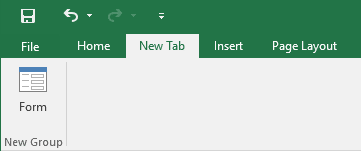
Add it in your own menu:
-
add it in Quick Access toolbar:

To use the data form, follow these steps:
-
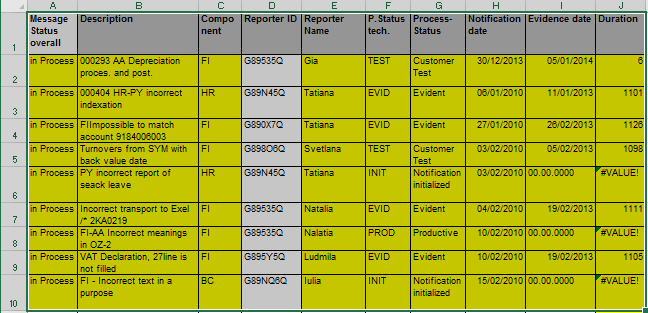
Select data with headers of the columns in the first row of your data range:
-
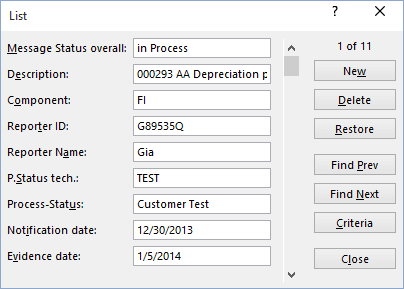
Click the Form… button on your own menu or in Quick Access toolbar. Excel displays a dialog box customized to your data:
Notes:
-
To move between the text boxes, press Tab.
-
You can’t modify formulas using the data entry form – the formula result appears as text, not as an edit box:
-
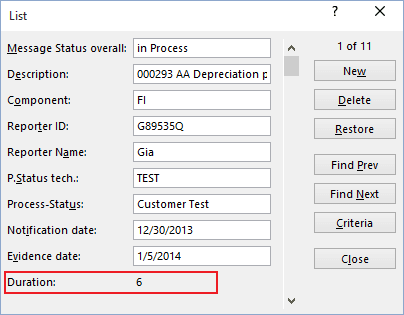
To add new row to your table, click New button.
-
You can also use the form to edit the existing data.
Hope it is helpful for You_____________
Contact for any further queries:
Your message has been sent



Alternate Corporate Tax (ACT)
Finance Act 2014 introduced new scheme of taxation according to which:
Company shall be required incorporate 17% of its accounting profit being Alternate Corporate Tax (ACT) in to tax computations so as to pay higher of :
- Tax @ 17% of accounting profit
- Actual tax ;or
- Minimum tax on turnover u/s 113 of the Income Tax Ordinance(ITO), 2001.
Accounting profit shall be adjusted for following before applying above mentioned ACT
1.Exempt income under Income Tax Ordinance, 2001.
2.Capital gains on disposal of specified securities
3.Income as a result of import. i.e. Presumptive Tax Regime(PTR) or Final Tax Regime (FTR)
4.Dividends PTR/FTR
5.Supply of goods subject to PTR/FTR
6.Execution of contract subject to PTR/FTR
7.Exports indenting commission subject to PTR/FTR
8.Prizes and winning subject to PTR/FTR
9.Brokerage and Commission subject to PTR/FTR
10.Income subject to tax credit u/s 65D and 65E of the ITO, 2001.
Any excess tax paid over and above actual shall be available for carry forward against tax payable for immediately succeeding 10 tax years.
The carry forward of Alternate Corporate Tax shall not dis-entitle the person to claim carry forward of Minimum tax on the basis of turnover u/s 113 of the ITO, 2001.
The Scheme shall be applicable from the tax year 2014 i.e. Income Tax returns due on 31 December 2014 shall be required to consider Alternate Corporate Tax.
MS Excel digits in words of PKR.
Start Microsoft Excel.
Press ALT+F11 to start the Visual Basic Editor.
On the Insert menu, click Module.
Type the following code into the module sheet.
 Option Explicit
 'Main Function
 Function SpellNumber(ByVal MyNumber)
 Dim Rupees, Paisas, Temp
 Dim DecimalPlace, Count
 ReDim Place(9) As String
 Place(2) = " Thousand "
 Place(3) = " Million "
 Place(4) = " Billion "
 Place(5) = " Trillion "
 ' String representation of amount.
 MyNumber = Trim(Str(MyNumber))
 ' Position of decimal place 0 if none.
 DecimalPlace = InStr(MyNumber, ".")
 ' Convert Paisas and set MyNumber to dollar amount.
 If DecimalPlace > 0 Then
 Paisas = GetTens(Left(Mid(MyNumber, DecimalPlace + 1) & _
 "00", 2))
 MyNumber = Trim(Left(MyNumber, DecimalPlace - 1))
 End If
 Count = 1
 Do While MyNumber <> ""
 Temp = GetHundreds(Right(MyNumber, 3))
 If Temp <> "" Then Rupees = Temp & Place(Count) & Rupees
 If Len(MyNumber) > 3 Then
 MyNumber = Left(MyNumber, Len(MyNumber) - 3)
 Else
 MyNumber = ""
 End If
 Count = Count + 1
 Loop
 Select Case Rupees
 Case ""
 Rupees = "No Rupees"
 Case "One"
 Rupees = "One Dollar"
 Case Else
 Rupees = Rupees & " Rupees"
 End Select
 Select Case Paisas
 Case ""
 Paisas = " and No Paisas"
 Case "One"
 Paisas = " and One Cent"
 Case Else
 Paisas = " and " & Paisas & " Paisas"
 End Select
 SpellNumber = Rupees & Paisas
 End Function

 ' Converts a number from 100-999 into text
 Function GetHundreds(ByVal MyNumber)
 Dim Result As String
 If Val(MyNumber) = 0 Then Exit Function
 MyNumber = Right("000" & MyNumber, 3)
 ' Convert the hundreds place.
 If Mid(MyNumber, 1, 1) <> "0" Then
 Result = GetDigit(Mid(MyNumber, 1, 1)) & " Hundred "
 End If
 ' Convert the tens and ones place.
 If Mid(MyNumber, 2, 1) <> "0" Then
 Result = Result & GetTens(Mid(MyNumber, 2))
 Else
 Result = Result & GetDigit(Mid(MyNumber, 3))
 End If
 GetHundreds = Result
 End Function

 ' Converts a number from 10 to 99 into text.
 Function GetTens(TensText)
 Dim Result As String
 Result = "" ' Null out the temporary function value.
 If Val(Left(TensText, 1)) = 1 Then ' If value between 10-19...
 Select Case Val(TensText)
 Case 10: Result = "Ten"
 Case 11: Result = "Eleven"
 Case 12: Result = "Twelve"
 Case 13: Result = "Thirteen"
 Case 14: Result = "Fourteen"
 Case 15: Result = "Fifteen"
 Case 16: Result = "Sixteen"
 Case 17: Result = "Seventeen"
 Case 18: Result = "Eighteen"
 Case 19: Result = "Nineteen"
 Case Else
 End Select
 Else ' If value between 20-99...
 Select Case Val(Left(TensText, 1))
 Case 2: Result = "Twenty "
 Case 3: Result = "Thirty "
 Case 4: Result = "Forty "
 Case 5: Result = "Fifty "
 Case 6: Result = "Sixty "
 Case 7: Result = "Seventy "
 Case 8: Result = "Eighty "
 Case 9: Result = "Ninety "
 Case Else
 End Select
 Result = Result & GetDigit _
 (Right(TensText, 1)) ' Retrieve ones place.
 End If
 GetTens = Result
 End Function

 ' Converts a number from 1 to 9 into text.
 Function GetDigit(Digit)
 Select Case Val(Digit)
 Case 1: GetDigit = "One"
 Case 2: GetDigit = "Two"
 Case 3: GetDigit = "Three"
 Case 4: GetDigit = "Four"
 Case 5: GetDigit = "Five"
 Case 6: GetDigit = "Six"
 Case 7: GetDigit = "Seven"
 Case 8: GetDigit = "Eight"
 Case 9: GetDigit = "Nine"
 Case Else: GetDigit = ""
 End Select
 End Function
Excel 2002 and Excel 2003
To use Insert Function, follow these steps:
Select the cell that you want.
Click Insert Function on the Standard toolbar.
Under Or select a category, click User Defined.
In the Select a function list, click SpellNumber, and then click OK.
Enter the number or cell reference that you want, and then click OK.
DOWNLOAD a sample Excel File
and ENJOY


50 Communications Activities, Icebreakers, and Exercises
Here you will find the following 50 Communications
Activities, Icebreakers, and Exercises discussed:
Part I. Communications Principles
- Communications Is an Art
- Communicating Time
- Communications Is the Key
- I Know You Believe You Understand
- Communications Model
- Listening Dilemma
- Interactive Listening Tips
- Listening Bad Habits
- Listening Questionnaire
- Seven Levels of Listening
- Silent Messages
- The Three Levels of Communications
- Nonverbal Listening Test
- Laws of Remembering
- Laws of Forgetting
- Meaning of Words
- Communications Circles
- Attention Spans
- Meaning of Listening
Part II. Communications Icebreakers
- Vanity Name Cards
- Repeating Introductions
- Circle, Square, Triangle, or Z
- Introducing Each Other
- Fantasy Career
- Name that Participant
- Story of Your Name
- Nickname Game
- Introduction Bingo
- Card Match
Part III. Communications Exercises
- Reading Test
- The Longest Line
- Color Block
- Following Directions
- Train Story
- Count the Ss
- Communications Shutdowns
- Repeat the Question
- Quick Answers
- Rephrasing Exercise
- Wedding Story
- Who Done It?
- Picture Puzzle
- Creative Fairy Tale
- Rumors
- The Shoe Store
- Two Moose Sitting on a Log
- Communications Styles
- “Oh”
- Word Games
- Trading Cards
55 Must-Know Phrases to Land a Job!
55 Must-Know Phrases to Land a Job!
We will be discussing the following things in this Post:
Speaking With Your Recruiter NEW!!!
Describing Your Educational Background
Describing Your Profile UPDATED!!!
Describing Previous Experience and Your Current Position UPDATED!!!
Explaining Why You Want This Job
The Tricky Part of Any Interview – Salary UPDATED!!!
What Sets You Apart From Other Candidates?
Language Skills
You should CONSTANTLY practice with yourself during these last days leading up to the interview!
Speaking With Your Recruiter NEW!!!
NEW! I would consider any decent job offer – let’s assume for argument’s sake that you’re really stuck for money and you are prepared to accept any job offer for as long as it pays your bills and puts food on your family’s table. Now, this is how you explain it to the recruiter – instead of saying “I’m desperate to find a job and I’m ready to do anything!” you can make it sound smarter and more professional.
NEW! I’d be willing to take up employment in – this is a somewhat similar phrase, the only difference is that with this one you can be more specific and tell your recruiter what sector you’d be willing to work in. And by the way – there’s nothing wrong with starting with the previous sentence and then continuing with this one: “Eventually I would consider any decent job offer, but for the time being I’d be willing to take up employment in warehousing because that’s the kind of background I have.”
Describing Your Educational Background
I graduated from … University (College) in … – this is a sentence structure you can use when telling what University or College you graduated and when it happened: “I graduated from Trinity College Dublin in 2007.”
I majored in … – if you’ve been studying at a third-level institution such as a University, you’ll know that soon after commencing your studies you have to choose a major (a specialty within your field of study). This is how you explain to your job interviewer what your major was: “… and I majored in Engineering.”
I graduated as … in … – here’s an alternative way of saying what your specialty is and when exactly you acquired the degree: “I graduated as a Mechanical Engineer in 2009.”
I enrolled for a … degree in … – you may also want to tell your future employer when exactly you started your studies, and there’s no better way of doing it than this one: “I enrolled for a bachelor’s degree in 2010!” You can also use the same word “enroll” when describing what course, for example, you’ve just started: “I’ve enrolled for a PC maintenance course and I’m going to finish it in 7 months.”
Obtained my … degree – this English collocation describes the simple fact of getting a degree – it’s just that the word “obtain” sounds a bit more fancy and will send the message to the interviewer that you’re a true professional: “… and I successfully obtained my master’s degree in 2 years.”
I’m an individual with a solid … educational background – do you want to praise yourself a little bit during the job interview? Well, there’s nothing wrong with that if done sparingly! And this phrase is just what you need: “I’m an individual with a solid IT educational background.”
Engaged in extensive extra-curricular activities – do you want to show to your potential employer that you’ve always stayed active during your studies and did a lot of extra work? This is the proper phrase to be used in such a situation!
Describing Your Profile UPDATED!!!
I’m a wide profile sales/marketing/customer support professional– this is a general phrase used to describe industry/-ies you’re been working in. If you say ‘wide profile’ instead of just ‘I’ve been working in …’, it will sound smarter and more professional!
I perform well under pressure is a phrase you can use to describe that you’re an employee very well capable of working when there’s a lot of pressure and you’ll do your best to get things done.
I’m used to working in a busy environment – similar to the previous one, and you can use it interchangeably with ‘I perform well under pressure’ during an interview so that you don’t constantly repeat yourself.
Customer-oriented means you value customers and you’ll be polite and efficient when dealing with them. Remember – customers are life-blood of every business, so this is what every potential employer will want to hear from you!
Meeting targets is a professional way of saying ‘getting things done in time’. In terms of work and professional environment, ‘targets’ is the word that’s used to describe tasks and assignments, so you should use it to sound like a true professional.
Handle stress easily – this phrase is especially relevant in customer support and other industries when dealing directly with customers – starting with catering and ending with direct sales.
Team player – if you’re a likeable person who gets along well with others while at the same time being able to maintain professional relationship instead of filling your workplace with gossip – then you’re a ‘team player’!
Can-do attitude – means you don’t accept defeat and you don’t get confused the moment situation gets difficult and complicated at work. You just get things done, you cheer others up in your workplace and you’re the right person for the job you’re going for!
Drive to succeed is one of characteristics of a typical career person, and you definitely want to mention that during the interview or in your CV. Your future employer will look for someone who’s naturally driven by success, so make sure to describe yourself as such a person.
Results driven – this phrase is somewhat similar to the previous one with emphasis on results. Success is a more general term; results imply you’re good at meeting targets, too.
Eager to learn – use this English collocation to stress the fact that you’re always taking opportunities to acquire new knowledge. It’s going to send a message to your interviewer that you’re not afraid of new duties and responsibilities!
Good at multitasking – use this phrase to convince your future employer that you’re not easy to give into despair when things are getting hectic and you have to juggle a lot of responsibilities at the same time.
NEW! I have a natural ability to… – this is a great way to describe your abilities, and what happens when you use the word “natural” in this context is – you’re making it sound as if you were born with that ability which in turn means you’re excellent in that particular department. “I have a natural ability to manage people” – it makes it sound like you’re a born leader, whereas if you simply say “I’m good at managing people”, it doesn’t send quite the same message to the interviewer.
NEW! Defuse conflict situations – if you’re ever asked about your ability to deal with difficult situations and difficult people in particular, this is the English collocation you may want to use – it’s a perfect way of describing the process of making sure that a conflict situation doesn’t escalate and gets resolved instead.
NEW! Committed to meeting deadlines and targets! – are you going for a position where you’d be required to work towards meeting targets and deadlines? Then describe yourself as being “committed” to them – it will boost your chances of getting selected for the job!
NEW! I possess excellent… skills – in case you think that you would run the risk of sounding too boastful during the interview, rest assured that that’s exactly what your interviewer wants to hear! I mean – when you do the job interview, you have to sell yourself, and that’s exactly what this phrase does – the word “excellent” sends out a strong message that your skills are up to scratch. “I possess excellent customer service skills” – surely if you were an interviewer, you’d be most likely to pay attention to someone who describes their customer service skills as being excellent instead of just “good”, right?
NEW! I’m a problem solver – if you’re going for a position where you’d be required to deal with difficult tasks, this is how you should describe yourself. It’s a simple yet effective way of letting the interviewer know that solving various problems is one of your greatest strengths!
Describing Previous Experience and Your Current Position UPDATED!!!
I have … years’ experience in the field – this phrase allows you to describe your experience precisely while using professional lingo at the same time.
Proven track record – when you say, for example – “I have a proven track record in telecommunication” – it means you’ve been working in the sector and you have an official employment history and related references.
Work against the clock – this is a perfect way of describing a fast-paced work environment in your previous or current job. Another good job-seeking related word combination to go with this one is ‘to meet deadlines’ – “We often have to work against the clock to meet deadlines during the busy season.”
SLA (Service Level Agreement) is a standard term used across industries whenever two parties have agreed on certain targets in terms of performance. It’s especially relevant for customer support based positions where every individual has to work towards meeting Service Level Agreements such as responding on e-mails within a certain period of time, logging phone calls properly and ensuring timely resolution of customer problems. So if you’ve been having similar responsibilities in your current/previous job but you didn’t know it’s called ‘meeting SLAs’ – make sure you use this smart phrase in your CV and job interview!
Liaise with other departments – it’s a fancy way of saying ‘to communicate with other departments’. If you’re willing to get the job though, you may as well learn the word ‘liaise’. When it comes to speaking about your communication between departments in your company, you’ll know exactly what phrase to use!
NEW! Deal with an extremely high level of… – this is a great way of describing the fact that you have to deal with a very high volume of work, and it makes it sound really professional. Here’s an example: “… and during the busy season I have to deal with an extremely high level of sales orders…” – you just have to admit it makes it sound like you’re a really hard worker, doesn’t it?
NEW! Currently I’m between jobs – if you happen to be out of work at the moment and the interviewer asks you the question: “Are you currently working?” – this is the phrase you may want to use! If you just say “I’m out of work”, it makes you sound as if you’re a little bit of a loser, but the phrase “between jobs” makes it sound as if you’re still working while at the same time being out of work!
Explaining Why You Want This Job
This question comes up during every job interview, and oftentimes interviewees aren’t quite sure how to respond to it. It’s essential therefore that you learn a few phrases you can use exactly for this purpose!
Also remember – never speak ill of your previous/current jobs or employers! Even if you’re going for a new job because you hate your boss, never admit to it during an interview. That’s when the following phrases come in handy:
I want to further my career in sales/marketing – it’s a perfect way of saying that there aren’t any promotional opportunities in your current job without admitting to it directly.
In line with my qualifications – if you tell your future boss that you want to get this job because it’s in line with your qualifications, it’s going to send a message that you’re a person fully aware of what your expertize is. And I don’t think they’ll keep probing you during the interview until they get you to confess that you’re just unhappy with your current job. They’ll take this answer as a satisfactory response and be happy with it!
I want to take on more responsibility – a totally valid phrase you can use when aiming for a slightly higher position. Just like when using the first phrase in this section you can use this sentence, highlight the fact that you’re an ambitious professional but don’t say directly – “Nobody will promote me in my current company…”
I want to pursue a career in… – this is how you explain that you simply want to start a career in a particular industry and that’s why you’re applying for this position: “Having worked 10 years in the retail industry, I made the decision to upskill and now that I have my certificate done, I want to pursue a career in accountancy.”
This job would be a natural progression – this is a great way of explaining why you actually want this particular job. Well, obviously you have to highlight what features of the new job would constitute the progression or else it will seem that you’re just using this phrase as a cliché: “Considering that I’d be required to deal with the customers directly, this job would be a natural progression for me as a sales professional!”
The Tricky Part of Any Interview – Salary UPDATED!!!
In 9 situations out of 10 you’re looking for a better pay when going for a new job, aren’t you? But what if the advertised position doesn’t have a price-tag attached to it? The problem is – you can’t just tell your potential employer right upfront – I want to get paid 12$/h!
That’s when you have to be smart and use the right phrases to send a message to the interviewer that you’re aware of what your experience and skills are worth.
NEW! I believe it’s fair for me to expect… – this is how you can start talking about your salary expectations – the word “fair” here is the key and sets the right tone for what’s to come after that!
Competitive salary – you can’t go wrong with this one – if you say that you’re expecting a ‘competitive salary’, it means you know what the industry average is and you’d like to get at least that amount of hourly wage.
My remuneration was adequate – if you don’t want to reveal how much you earned in your previous company, this is the phrase to use!
I expect experience based remuneration – as I already told you – mentioning numbers during a job interview speaks of bad manners, so if you’re quite an experienced professional in a certain field, it’s safe to say that you expect your experience to reflect on your remuneration package.
My salary expectations are in line with my qualifications and education – same thing as the previous phrase but with an emphasis on your qualifications and education. This is a good way of emphasizing your educational background and its role in your career – of course, if you have something really relevant to bring to the table. If you expect your bachelor’s diploma to work as a salary-boosting factor when applying for a catering position – better think twice!
What Sets You Apart From Other Candidates?
It’s another one of those questions that can make or break your job interview. The thing is – while both you and your future employer know that you’re probably not a unique person among other job-seekers out there, you’ve just got to sell yourself as the best person possible for the position!
And of course – don’t forget that being a foreign English speaker, you have to sell your spoken English skills as well, so that’s when the following phrases come in handy:
What sets me apart from other candidates is – this is how you can actually start the sentence to describe your unique qualities: “What sets me apart from other candidates is my ability to handle difficult customers.”
… is what makes me the best candidate for this position! – and this is another handy phrase used to make it 100% clear what you think is your best quality: “So I strongly believe that my ability to perform well under extreme pressure is what makes me the best candidate for this position!”
I’m self-motivated – this phrase is kind of overused, but if you really mean it, it says a lot about you as a worker. It means you don’t have to be constantly supervised and you’re mature enough to take on responsibility!
I take pride in my work – this a great phrase and I bet your future boss wants to employ someone who takes pride in his/her job and is enthusiastic enough to make sure day-to-day tasks are run effectively.
I’m very attentive to detail – here’s a quality that can really set you apart from others. I know from my own experience that small mistakes can lead to big expenses down the road for your employer, so having someone on board who’s going to be meticulous when it comes data entry and similar tasks is very important!
I’m 100% involved while performing work-related duties means you’re really dedicated and your future boss won’t have problems with you not completing your tasks and assignments.
I’m good at resolving problem situations – don’t forget to mention a difficult situation from your past which you resolved successfully. Typically it involves dealing with a difficult customer, but it can also include resolving other problems – delivery issues, technical problems and whatnot.
Language Skills
It’s of the utmost importance for you as a foreign English speaker to describe your English and other language skills so that those descriptions properly portray your capability of using the respective languages. Here’s how to describe your English skills other than just ‘fluent’:
I have effective communication skills in English – both verbally and in writing. It’s a perfect way of elaborating on the matter in your CV because it also explains that you’re good both at writing and speaking. ‘Fluent’ is a term that can be stretched; this phrase, however, leaves very few questions to be asked!
I’ve been speaking English for the last … years – you can use this sentence to alleviate any doubts that your English mightn’t be good enough for the job.
I’ve been working in an English speaking environment for the last … years – same as the previous one, with a slight emphasis on your work-related spoken English skills. It’s going to send a strong message to your future employer that you won’t have any problems communicating with your fellow employees and supervisors!
My English is competent for this industry – it’s a way of admitting that your English mightn’t be 100% fluent yet you can deliver 100% results in the respective industry. You’re probably better off avoiding this phrase unless you run into some English fluency issues during the interview and then this might be your last chance to salvage the situation.
… wouldn’t present any difficulties whatsoever – this is how you explain that you’re really comfortable using the English language: “Using English at work wouldn’t present me any difficulties whatsoever – I’ve been around English speakers for 5 years.”
As we all know, in times of stress your spoken English may suddenly sound quite bad, and I’ve written about dealing with such and similar problems extensively. Here are a few articles you should definitely read:
- Native English Speakers Don’t Always Spot Your Mistakes!
- How to Achieve Complete English Fluency in 4 Easy Steps
- Put On a Show Every Time You Speak in English
The biggest problem you may be facing is the following – your English is quite fluent, but stress is getting the better of you during the interview which in turn results in a lot of spoken English mistakes. Now, in your CV you’ve indicated that your English is fluent, but if that’s the case – why you’re sounding like a beginner English learner?
Therefore it’s best to prep up for the interview well in advance to avoid such situations, and if you’ve memorized at least a dozen smart phrases like the ones in this article, your chances of sounding like a fluent English speaker are much bigger!
You should CONSTANTLY practice with yourself during these last days leading up to the interview!
- Create the potential interview questions and answers on paper.
2. Highlight the most commonly used expressions & industry phrases (they’re the ones in the article above!)
3. Learn those expressions off by heart and do a role-play whereby you pretend to be both yourself and the interviewer.
4. For best results,record it all on a camcorder!
5. Do this exercise all over and over again until you can comfortably provide an answer on all possible questions.
And of course – on the interview day simply forget about it all and try and ignore everything – the mounting pressure, everything. Just go into the interview room and allow your mouth to do the talking because the more you’ll stress out, the worse you’ll perform!
Basically the key is to do LOADS of spoken practice beforehand and allow all those speech patterns to literally embed themselves into your brain so that you don’t have to FORCE yourself to say this or that particular thing.
 M. Adil Hussain
 Future Chartered Accountants